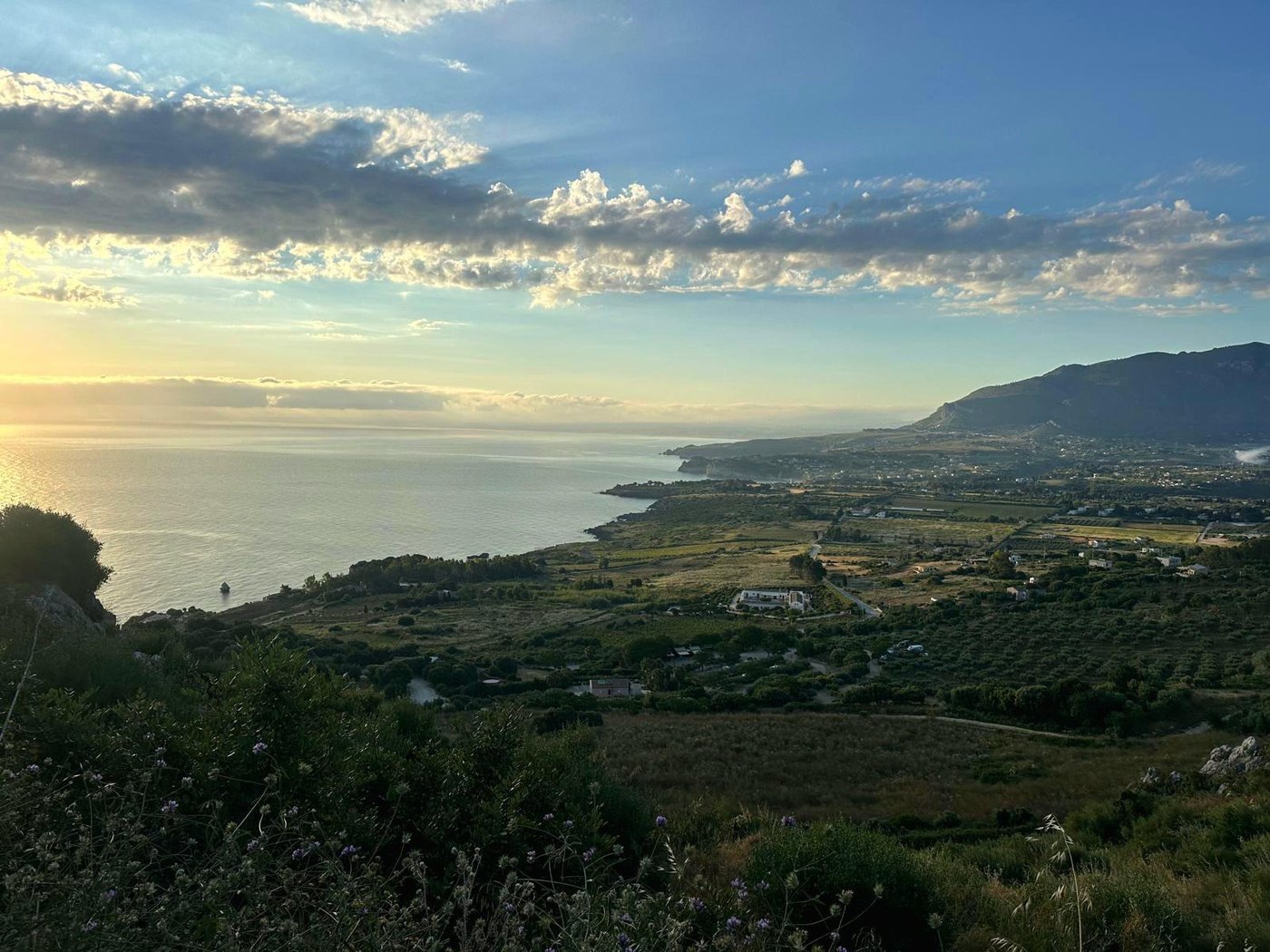
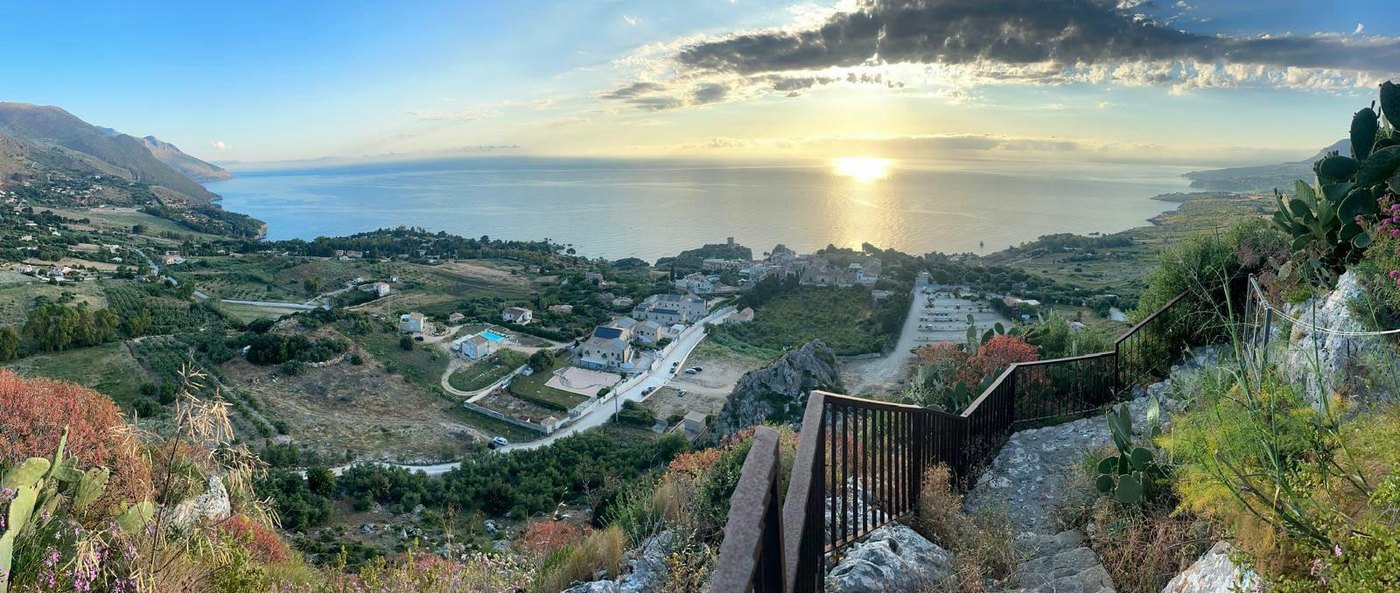
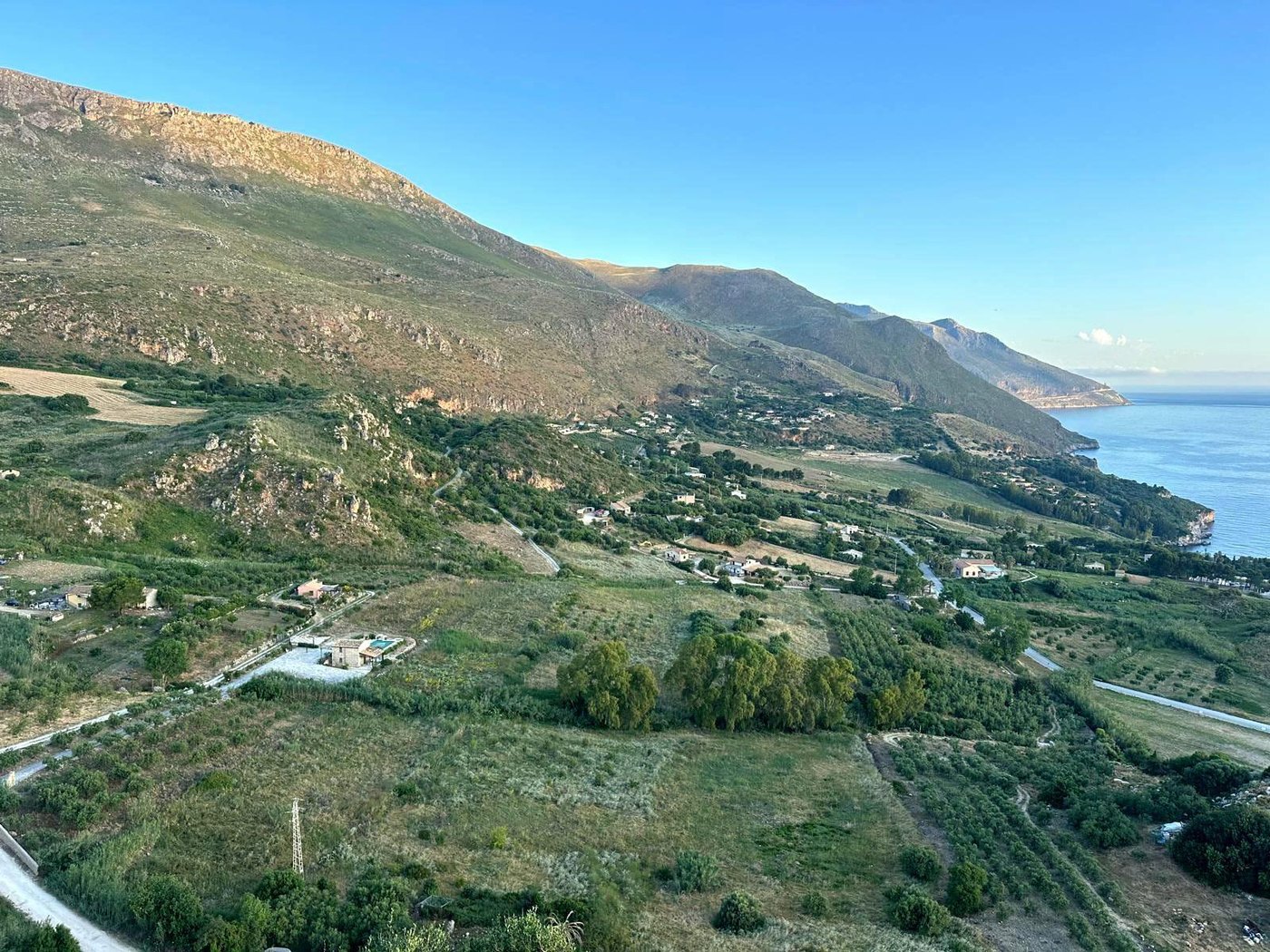
This morning early, Thorsten went on an excursion to the Bennistra Tower, which could be seen from the village, an ancient tower with spectacular views integrated into the system of constructions like this one that were built to protect Sicily from pirate and invader attacks.
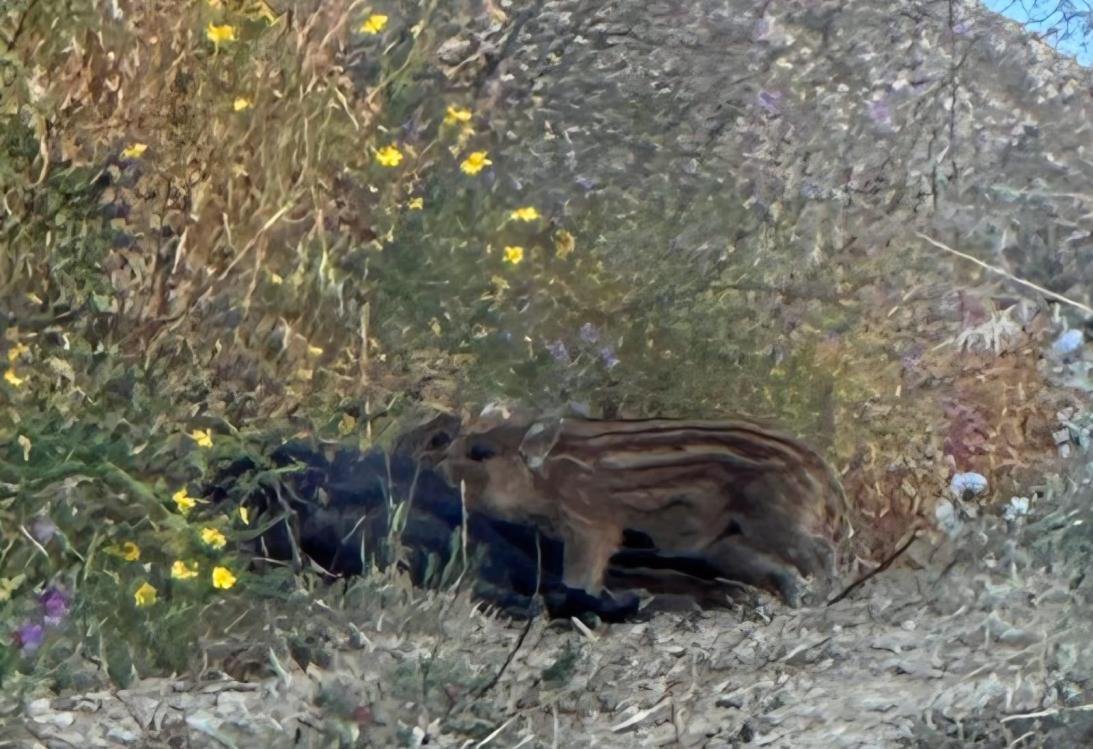
Yesterday he tried to convince me to go up with him, but seeing how steep the mountain was, I didn't even think about it. So, this morning bright and early, he wrapped himself in a blanket and headed up the mountain only to come face to face with a mother wild boar nursing her piglets in the middle of the path. We all know that if mothers feel their young are threatened, they attack, and T thought it would be a good idea to pick up a stone (to defend himself) and cough to make his presence known. He was very lucky because the lady decided to run away with her piglets to put them to safety.
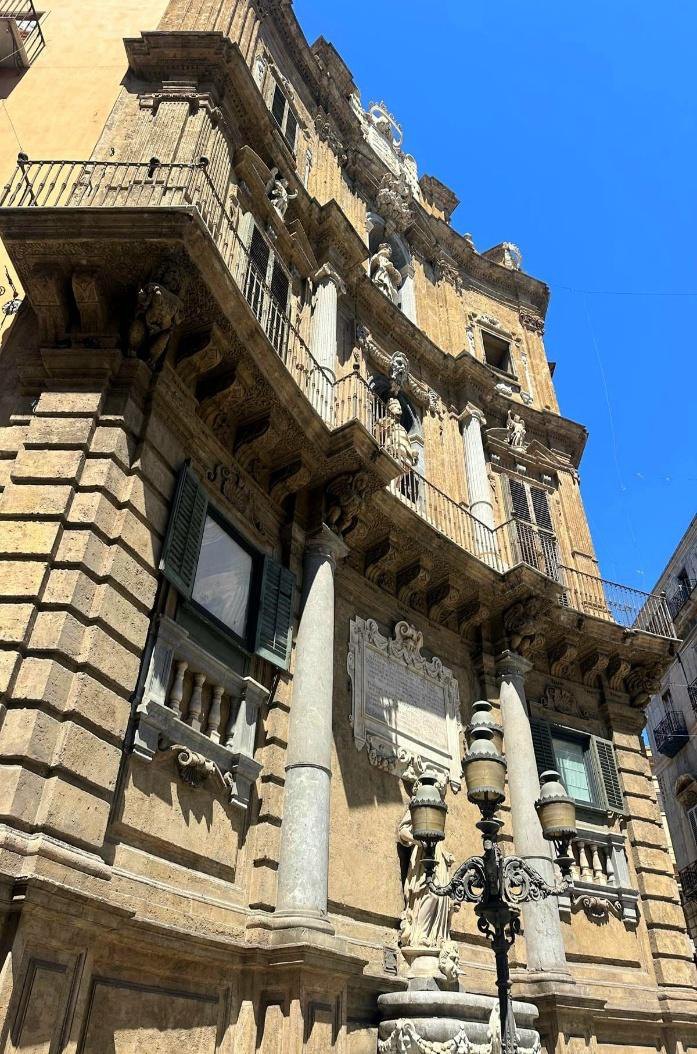
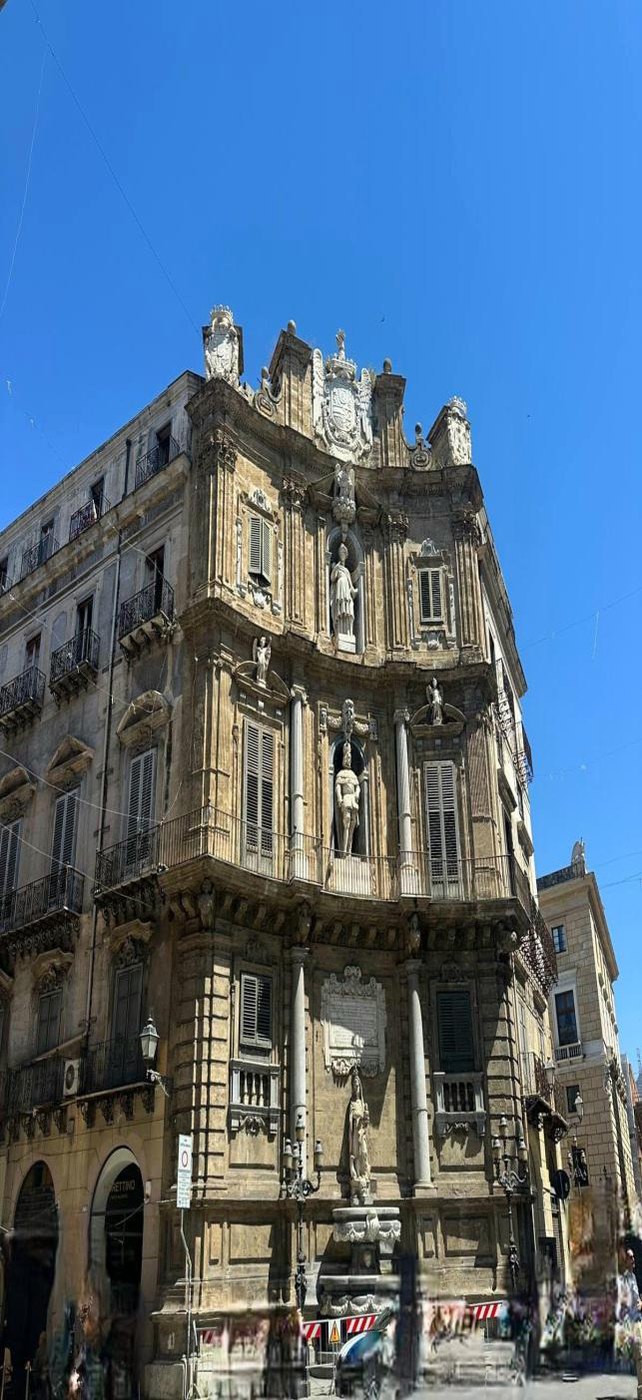
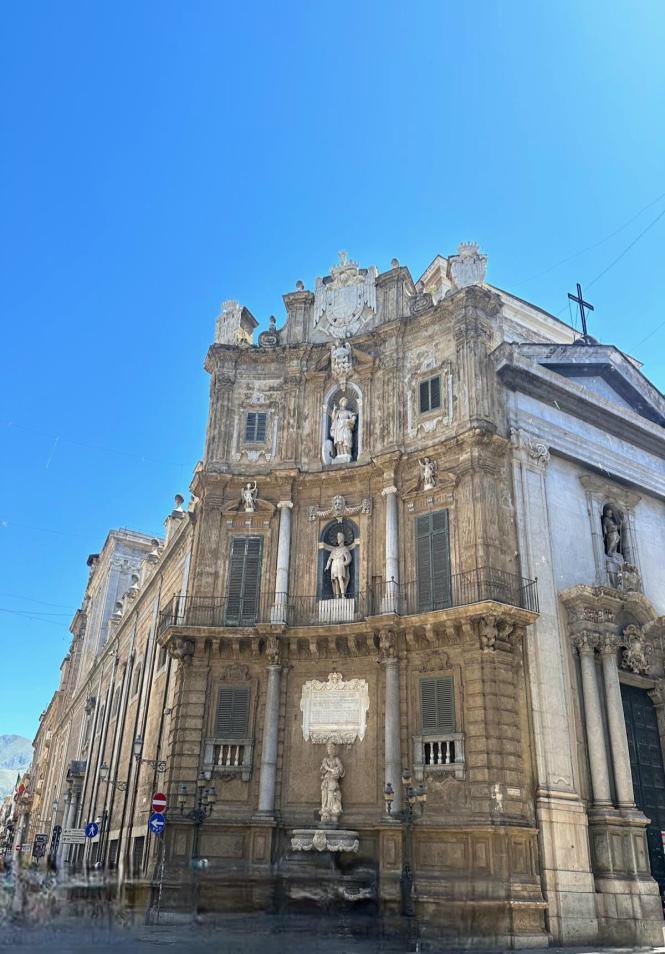
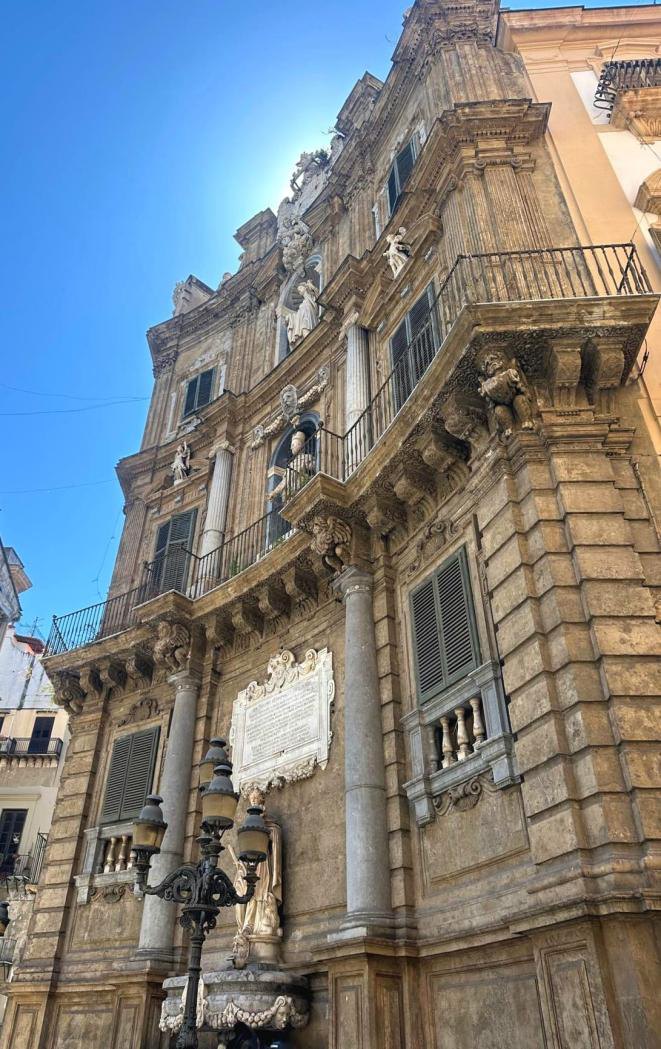
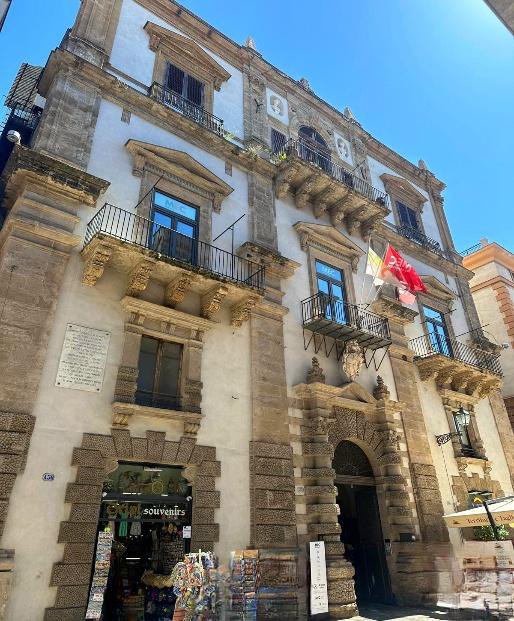
After the adventure, we set off towards Palermo, the capital of Sicily and the last city we will visit here. We have reserved two days because they say it’s worth it. The journey was quick and calm. I went straight there, and T barely stopped for a coffee as he usually does, but he avoided going through the mountains even though they were very tempting. This part of Sicily, as I mentioned, is quite rugged. We will spend the nights in an "urban garden" about twenty minutes from the center. A huge piece of land divided into small plots where each tenant grows what they like best and takes care of it. Luckily, they have turned a small part into a parking area for motorhomes with basic services. Everything is very rustic, but perfect for visiting the city without having to take Beast with us. The manager, Fausto, is super nice. Palermo is located in the center of the northern coast and is surrounded by mountains covered with abundant vegetation. It is an ancient city that reflects the wealth of millennia-old civilizations in its monuments. It was founded in the 8th-6th century BC as a Phoenician colony named Ziz but reached its peak when the Romans turned it into one of the key ports in trade between East and West. Its personality was forged by the different civilizations that occupied it, each leaving an indelible mark on the layout of its streets. The greatest destruction of its heritage occurred during World War II due to the heavy bombings it received, but fortunately, most of the damaged buildings were rebuilt relatively quickly, and today there is no corner of the old town that isn’t worth peeking into. The wealth of the city is perceived as soon as you approach the center where the two main arteries converge: Via Maqueda and Via Vittorio Emanuele in the so-called "Quattro Canti" because the four corners are chamfered, and on each of them stand four grand Baroque buildings, decorated with fountains and statues. One of them was hosting a wedding.
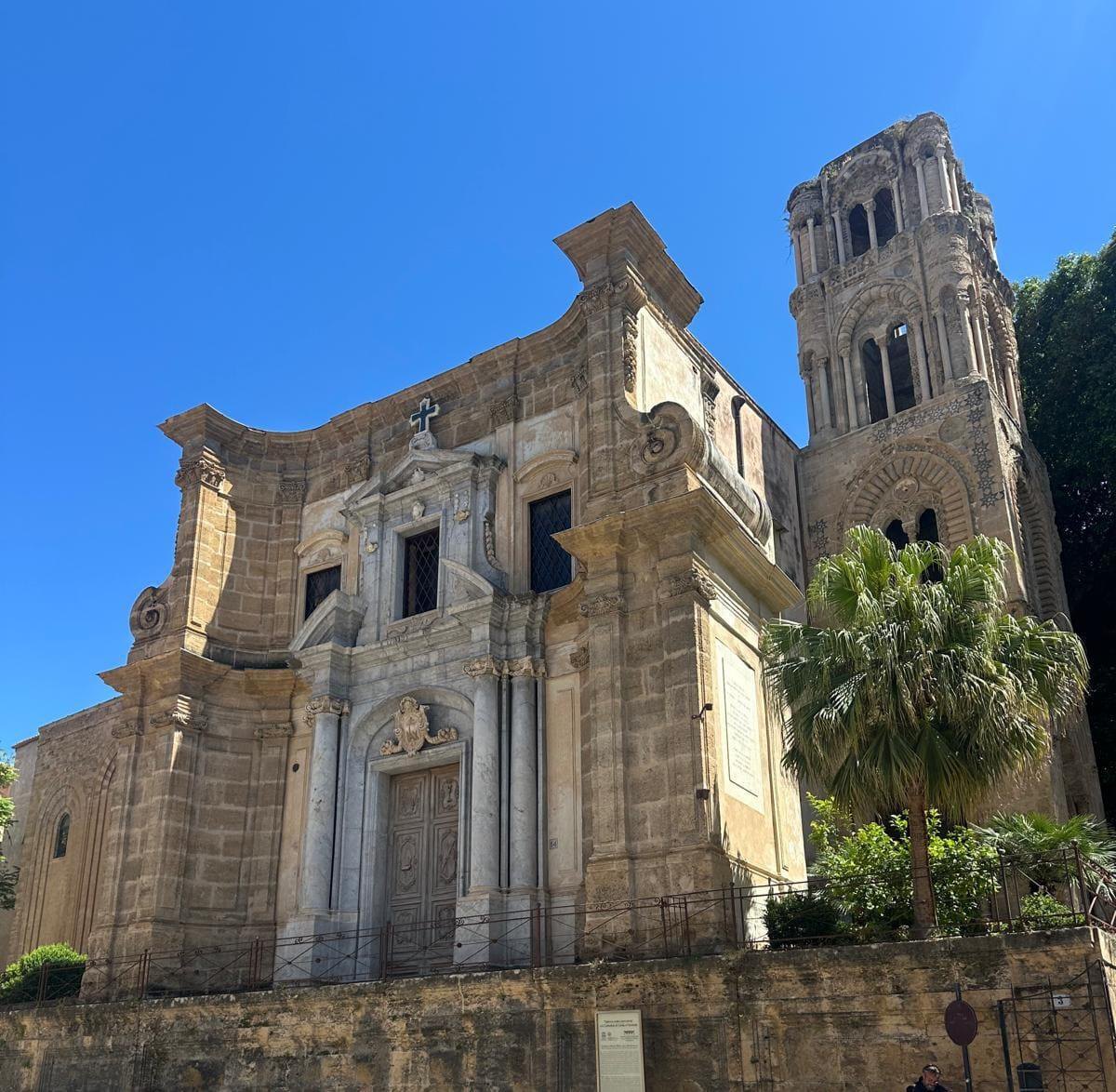
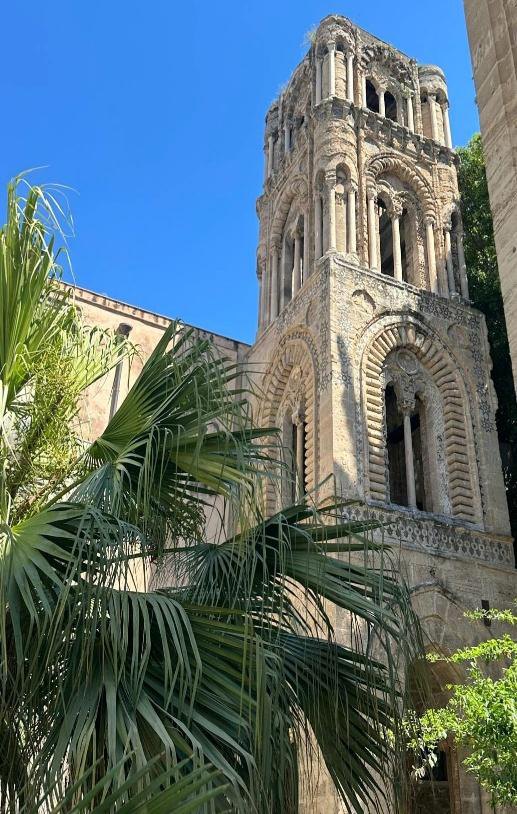
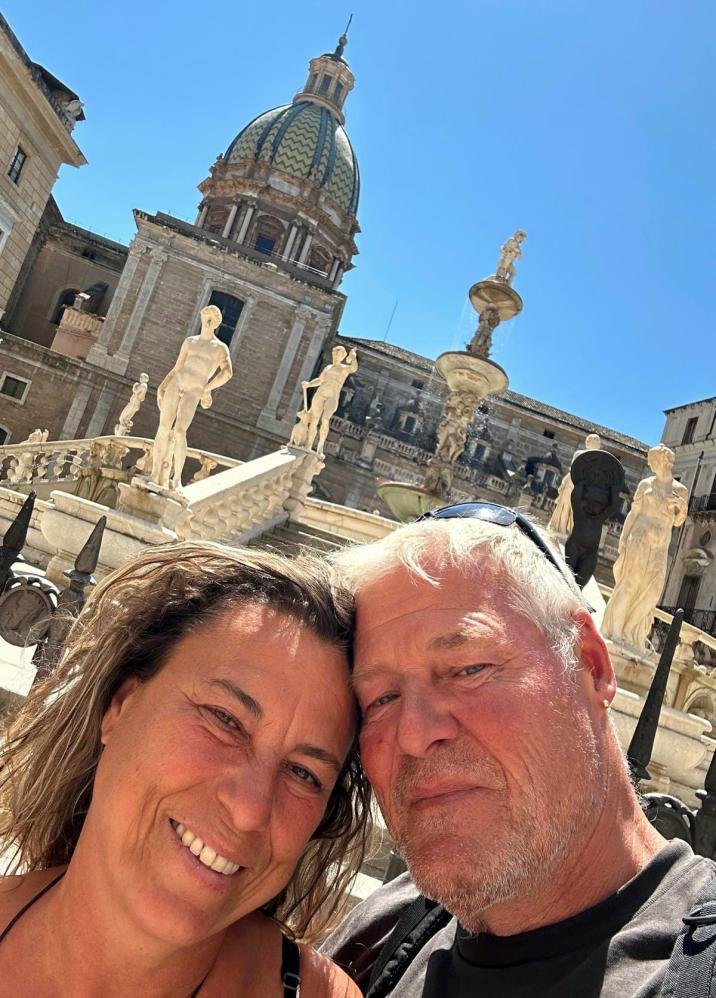
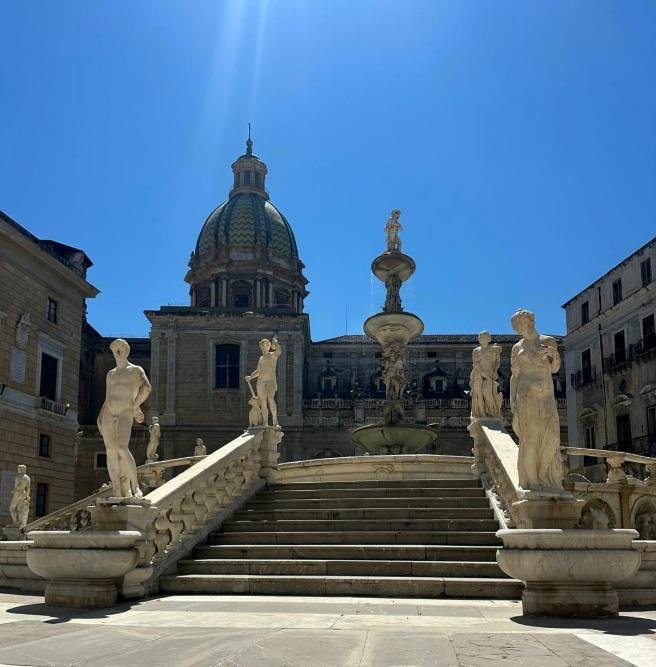
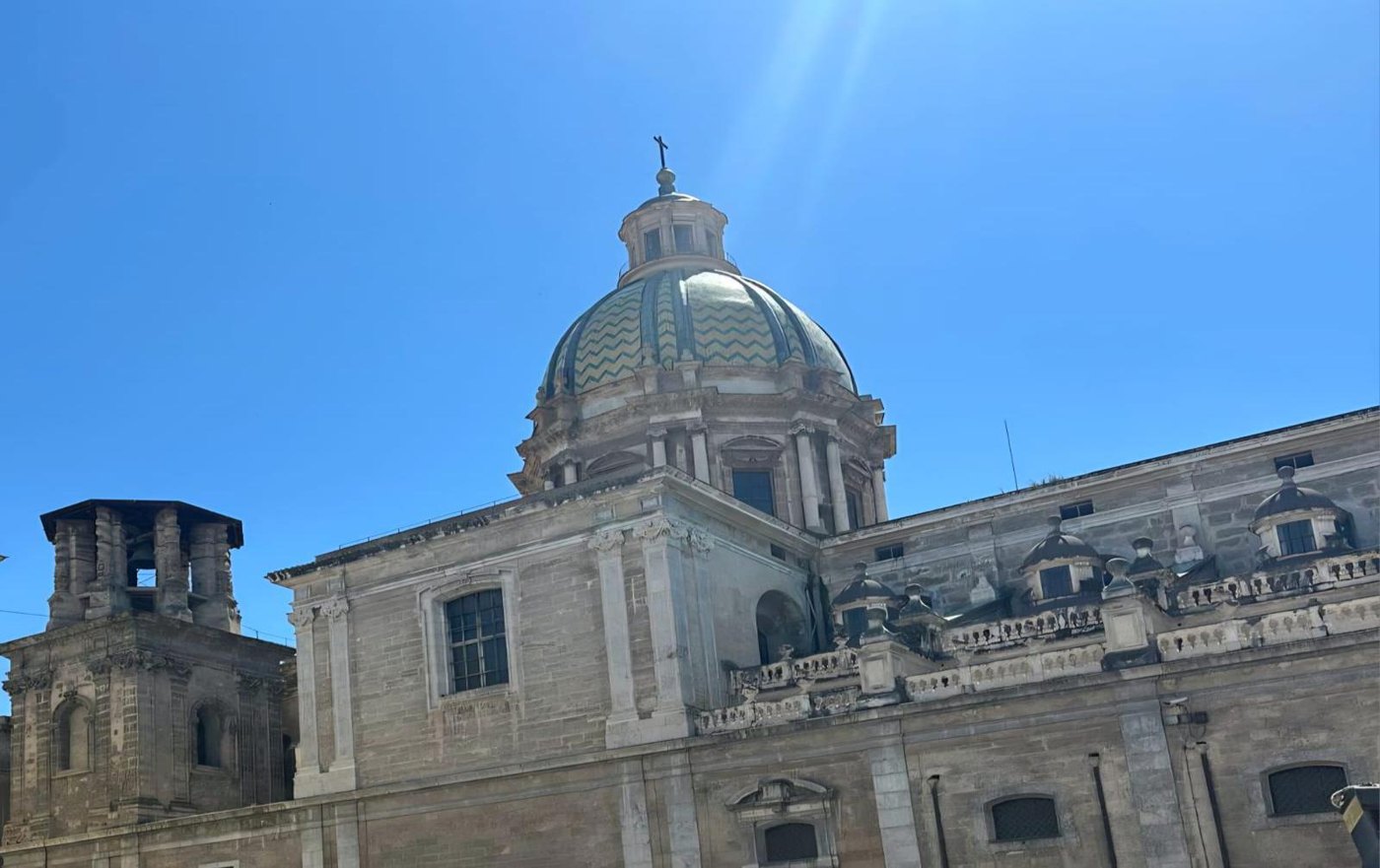
The Church of Martorana with its interior adorned with Byzantine mosaics from the 12th century, and in the dome stands the grand figure of the Christ Blessing. The Pretoria Fountain with enormous Renaissance sculptures intended for the private garden of a noble mansion in Florence. Normally, access to the interior of the fountain is from the southern staircase, but we couldn’t do it because it is being renovated, and part of it was fenced off.
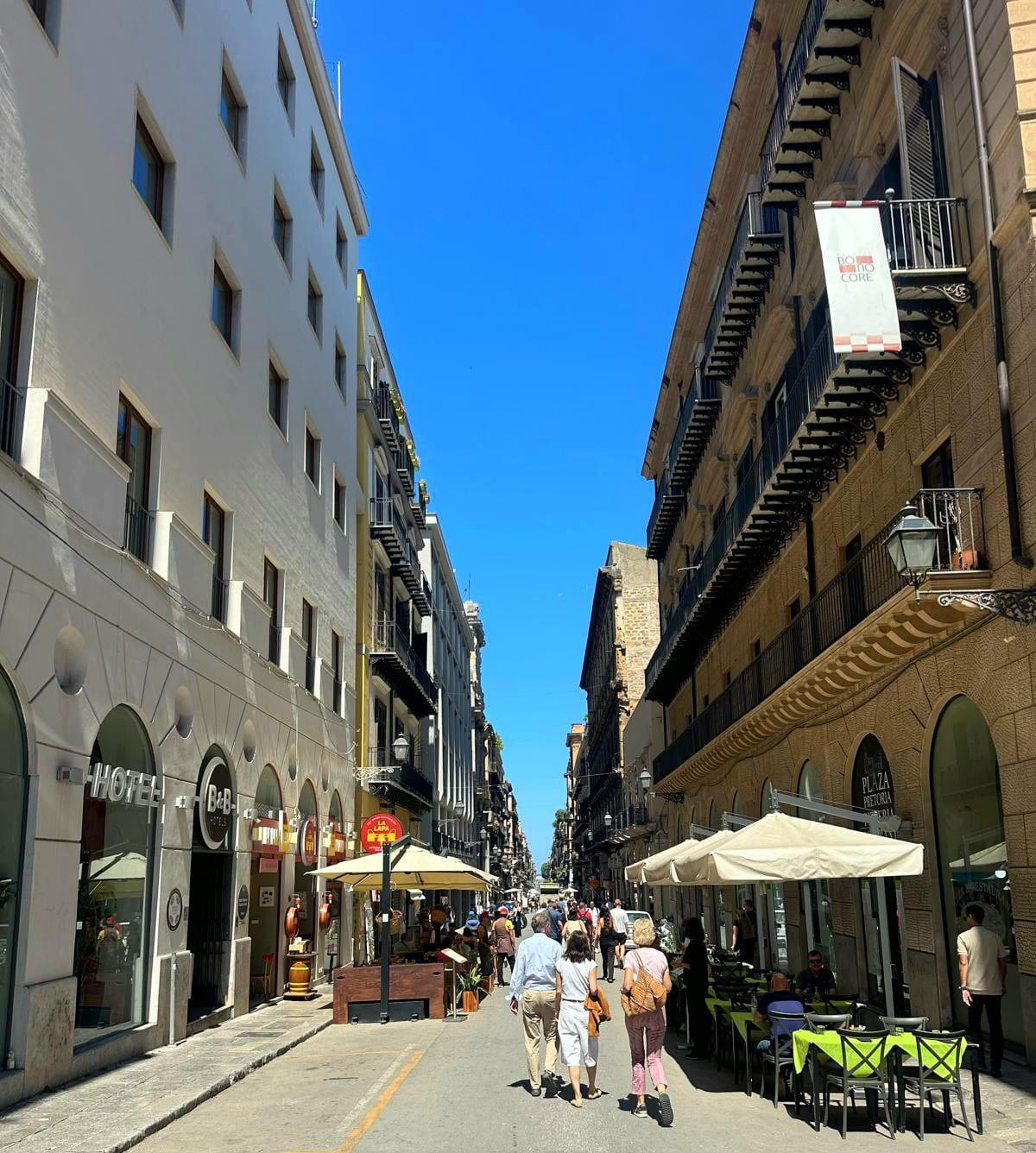
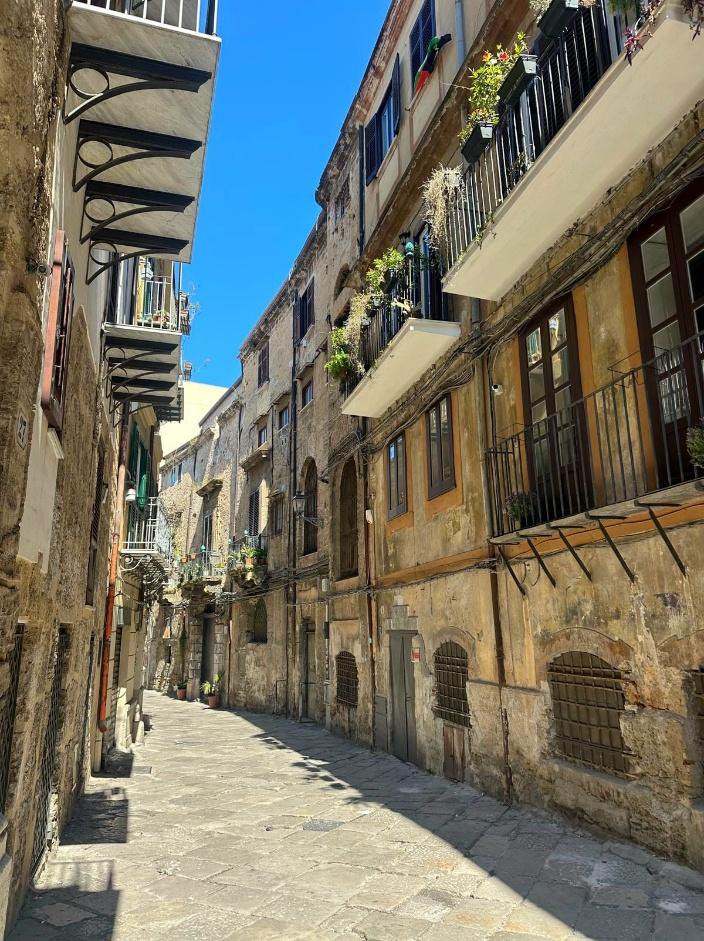
The streets of Palermo vibrate with the number of people who usually stroll through them. Interestingly, they are not overwhelming because they tend to be very fluid. Most of the people who venture through them are like us, tourists who come to enjoy a peaceful walk through its pedestrian streets.
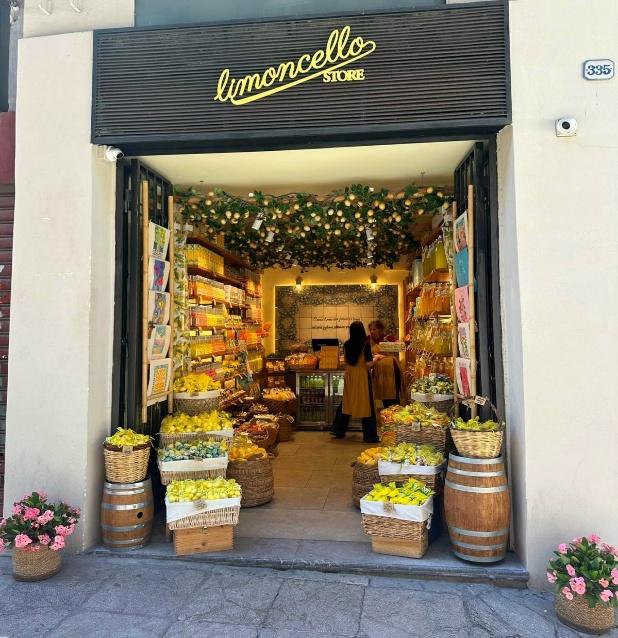
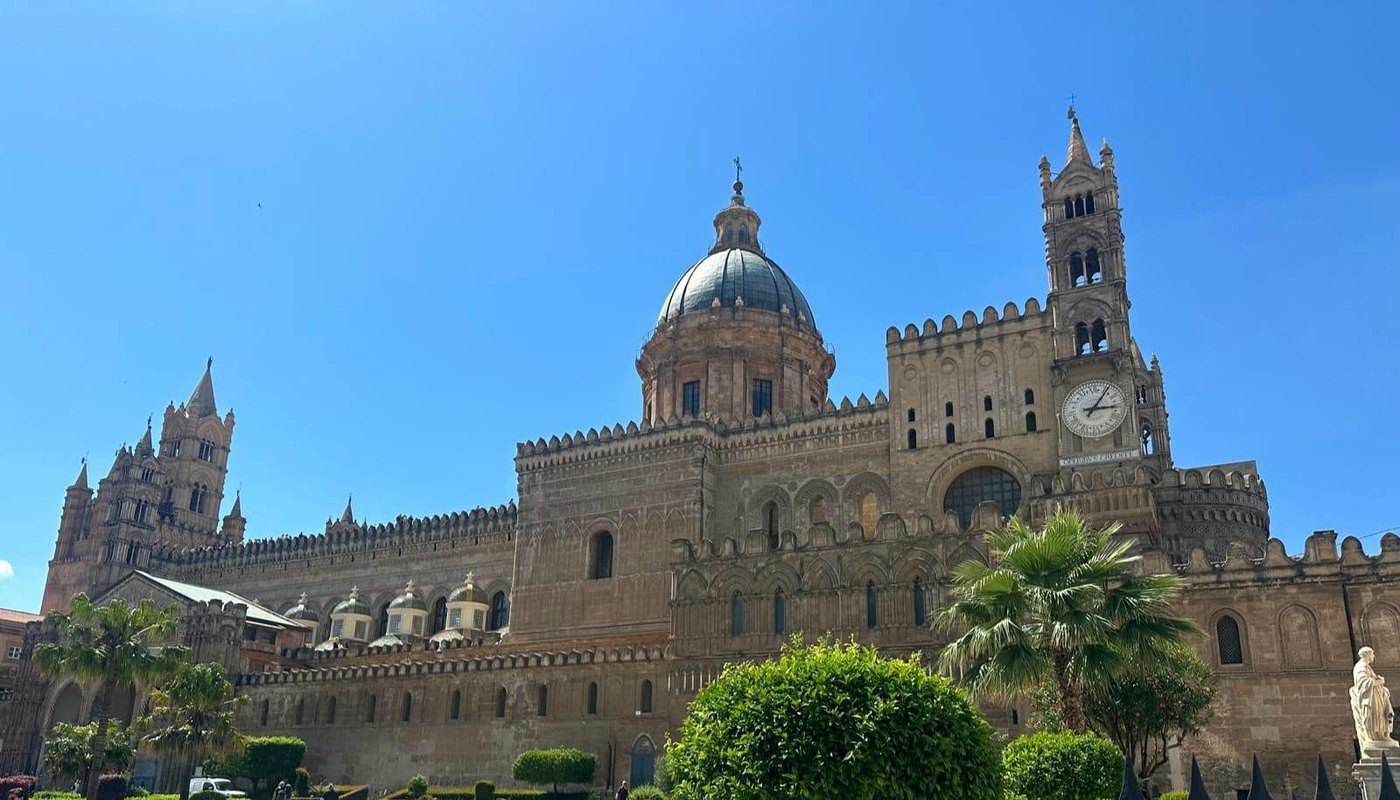
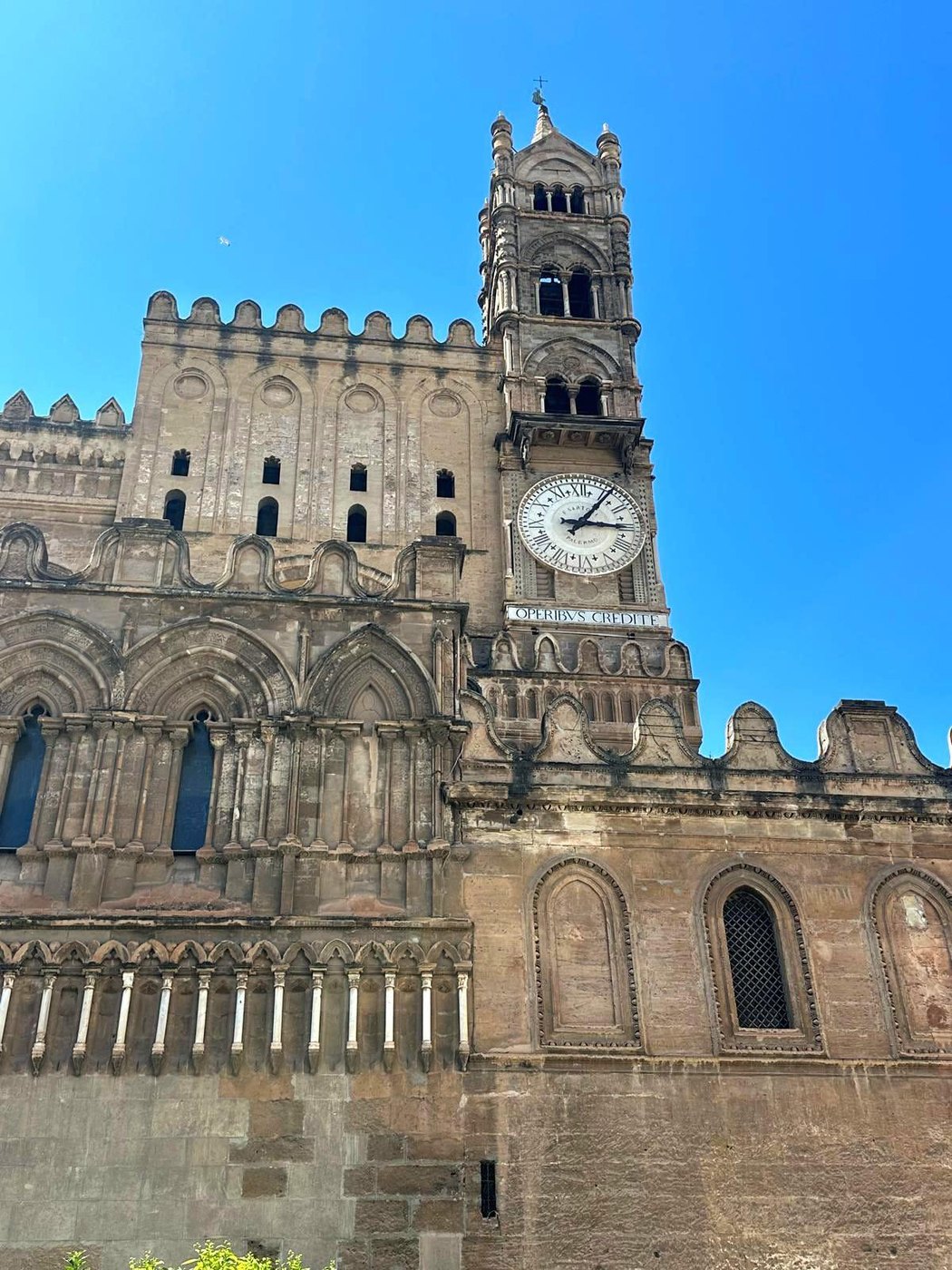
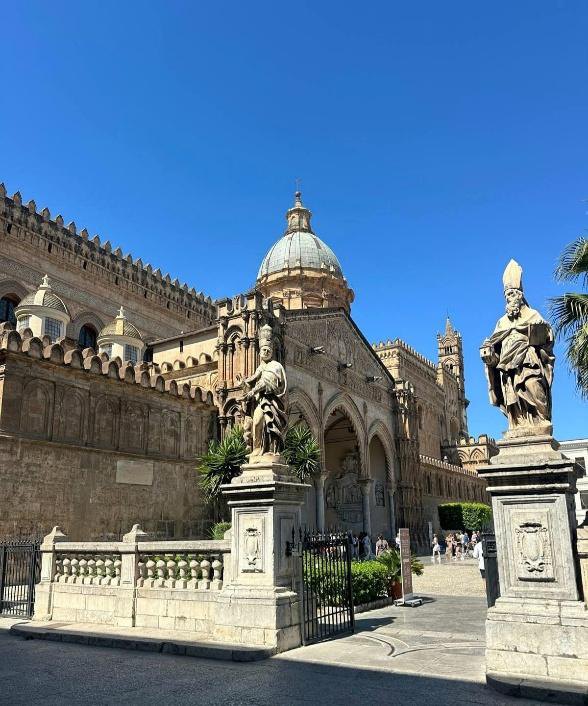
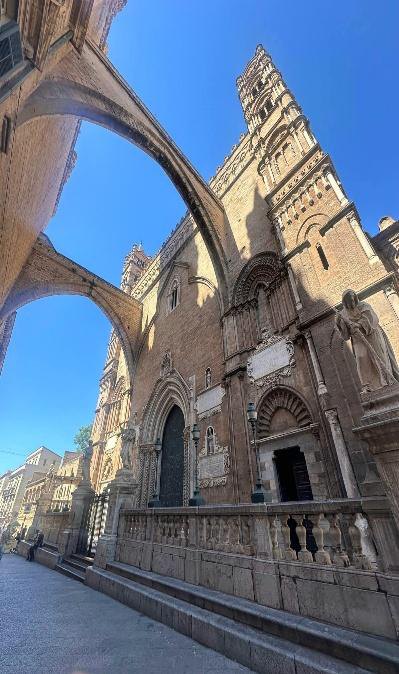
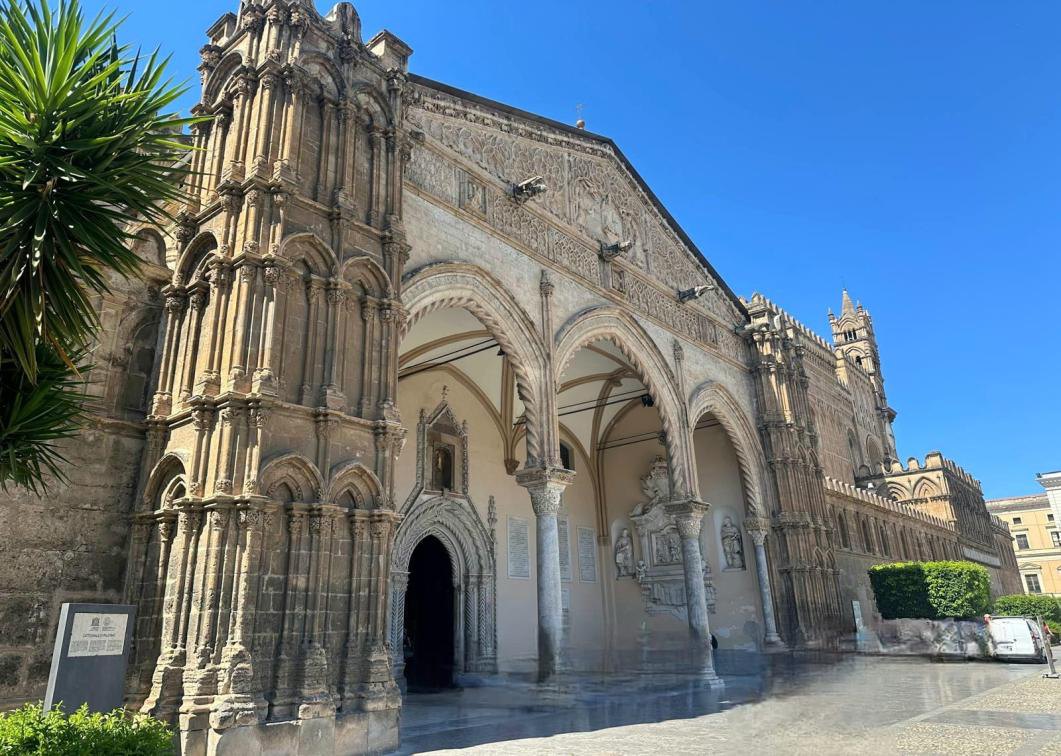
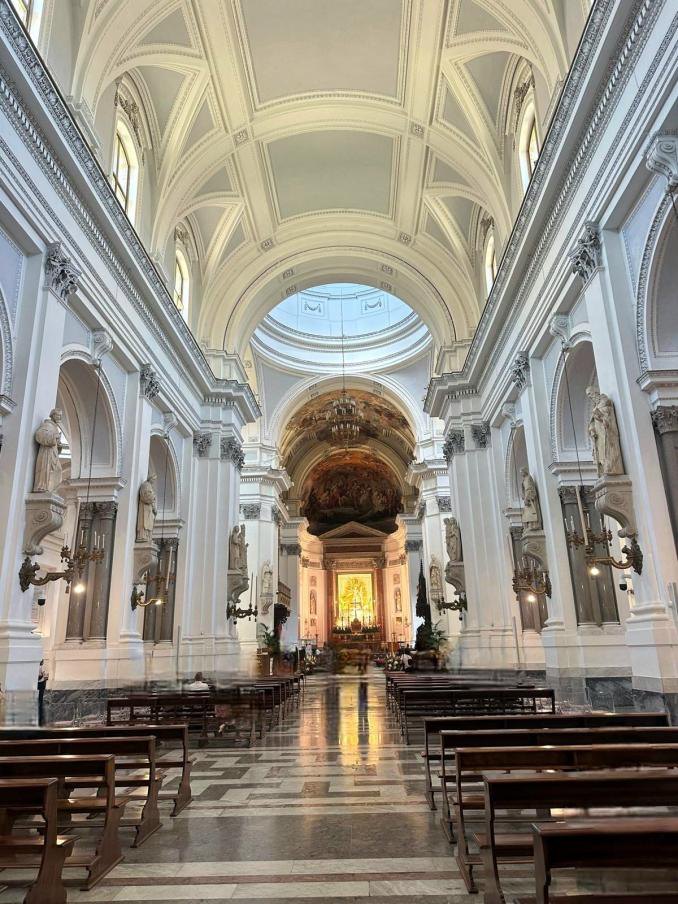
I haven't mentioned that the lemon is one of the symbols of Sicily, it grows everywhere, and its characteristic color fills most of the shops. One of the typical souvenirs is lemon magnets or fabrics decorated with this citrus. It is said that the richest "limoncello" is made with Sicilian lemons, although the liqueur itself is not from this region. The Cathedral of Palermo was consecrated to the Assumption of the Virgin in 1185. Since then, its exterior has been modified, although it still retains the Arab-Norman features of its origins.
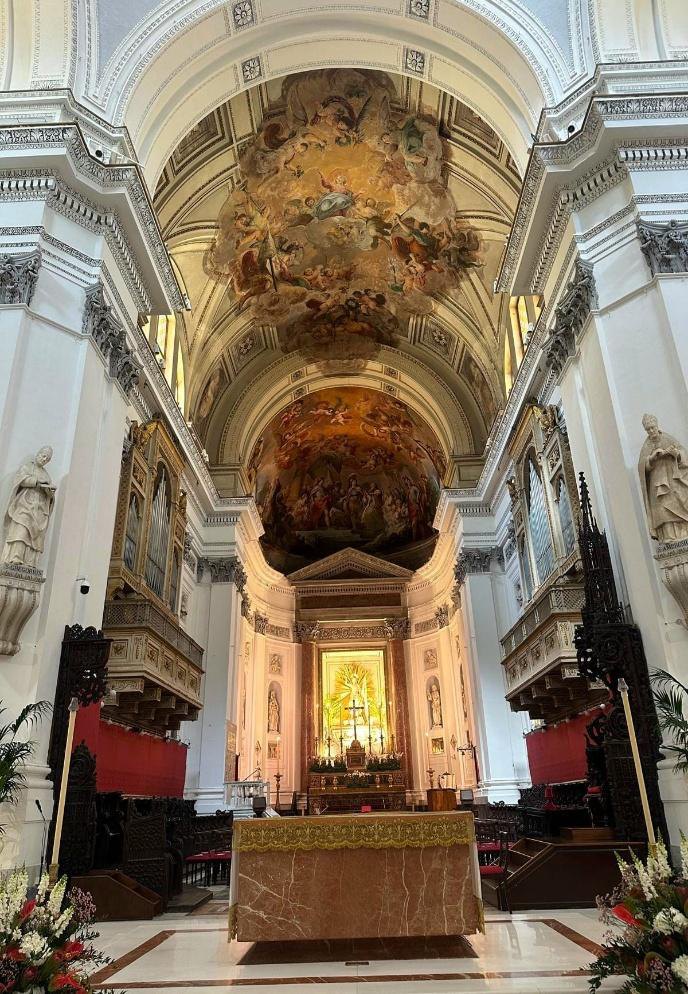
Each of the facades has its own personality, with the east being the only one that has maintained its original style intact. Its decorations use black volcanic stone mosaics over limestone moldings. The interior, unlike many other churches in the city, is astonishingly austere in terms of its ceiling decoration.
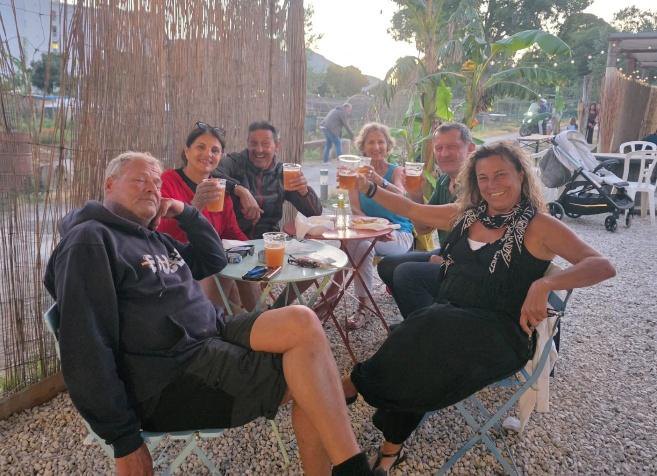
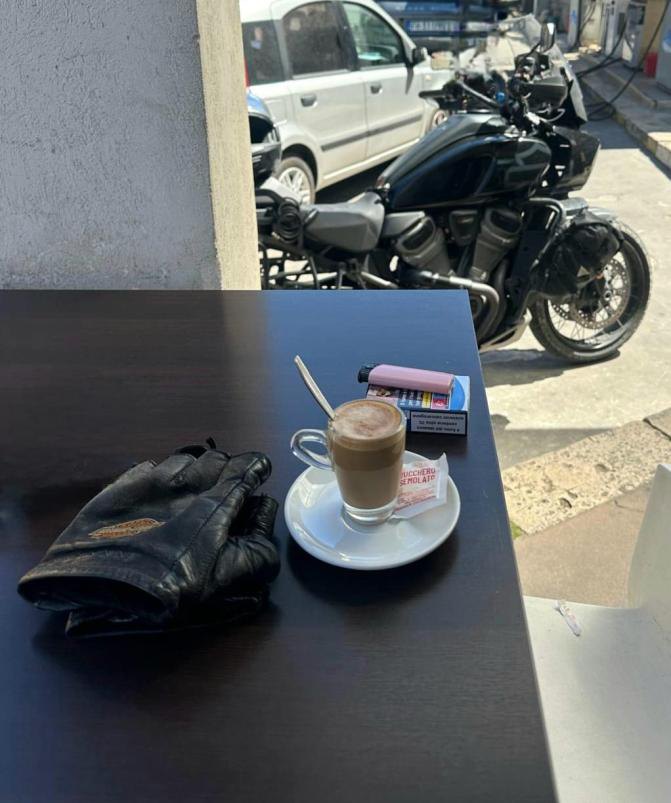
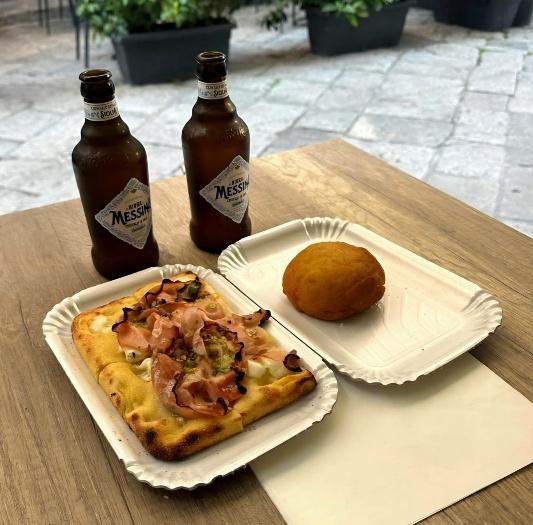
We spent almost six hours strolling through those streets, and the truth is that the enjoyment was maximum. Before heading back, we had a little snack because we didn’t feel like preparing dinner, and the intention was to go straight home, but entering the area where the garden is, there is a biker bar, and there was a group of friends we keep running into from time to time, Lina and Gerhart among them. We joined them, and the time spent was super pleasant. The bar owners, a young Italian couple who spoke a little Spanish, played Latin music, but we were too tired to dance. Luckily, it was less than a hundred meters from the bar to home because it got dark on us with all the things going on. Good night… I’ll keep telling you 😘
The flag of Sicily is known as the Trinacria and features a triskelion on a background divided diagonally from the top corner to the bottom. The upper part is red, and the lower part is yellow. These two colors represent the cities of Palermo and Corleone…
Today we head straight to the village of San Giovanni to catch another ferry towards Sicily. Crossing the Strait of Messina. The last time I was in these latitudes, Mount Etna was in full eruption on a cruise heading to Greece.
This morning we set off to the principality on our motorcycle for a little visit. To be honest, we went just to buy a sticker for Beast and to add the country to our list.
Join the conversation (0)
Share a thought, a question, or your own travel memory.
No comments yet. Be the first to write one!
Leave a comment