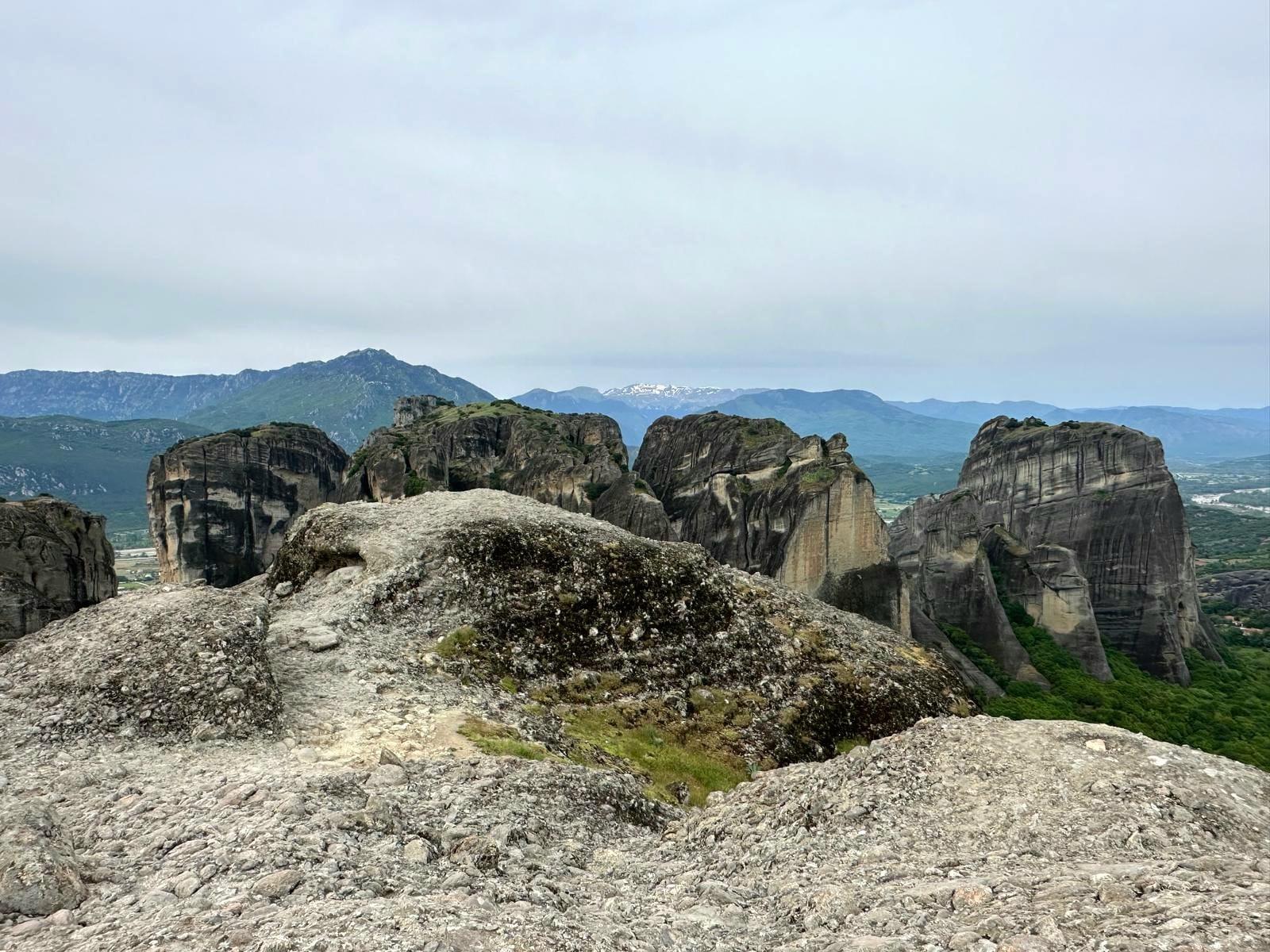
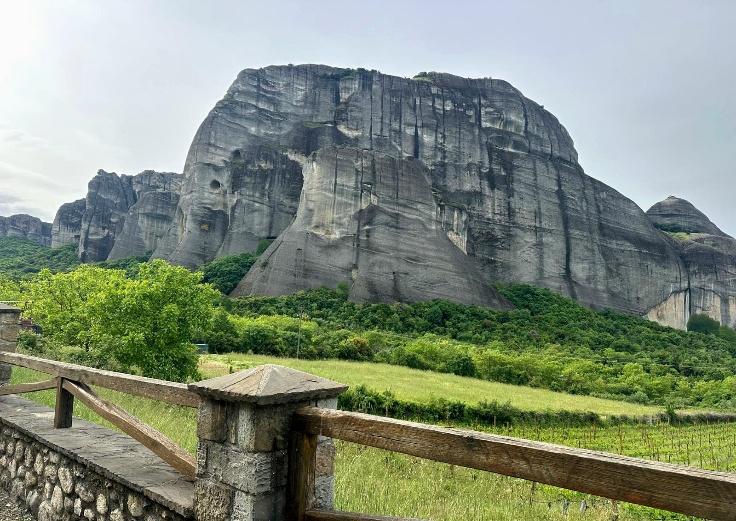
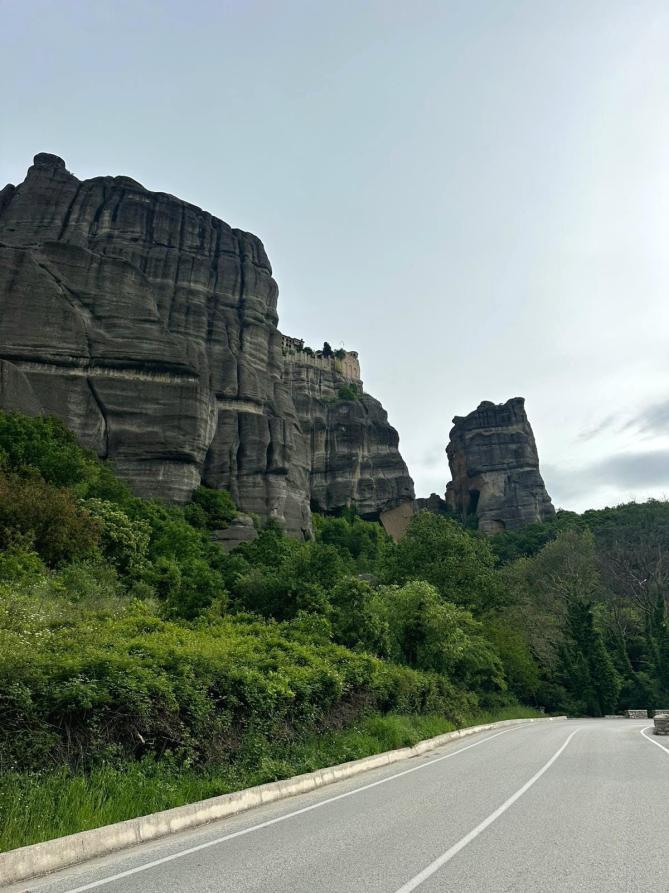
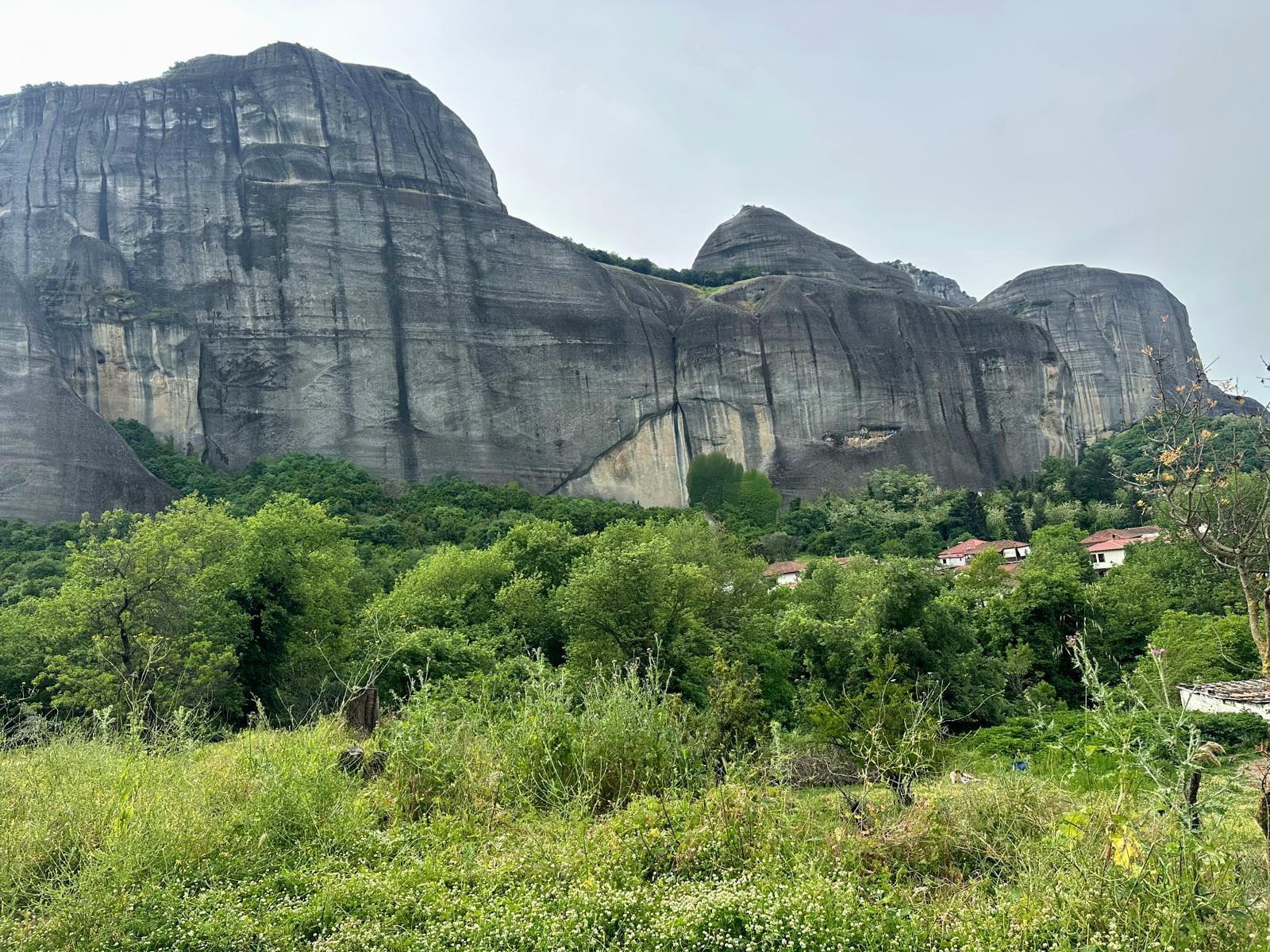
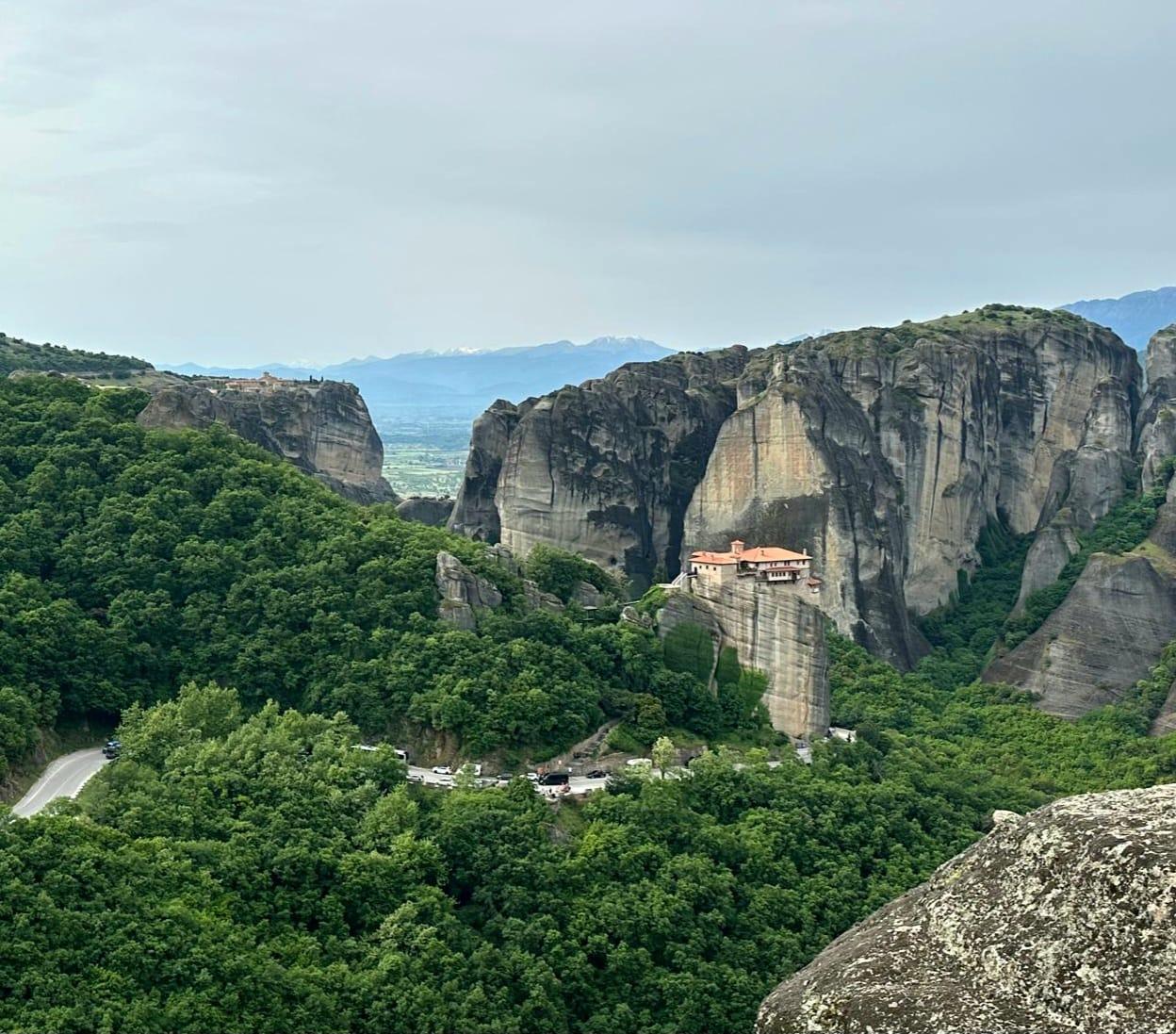
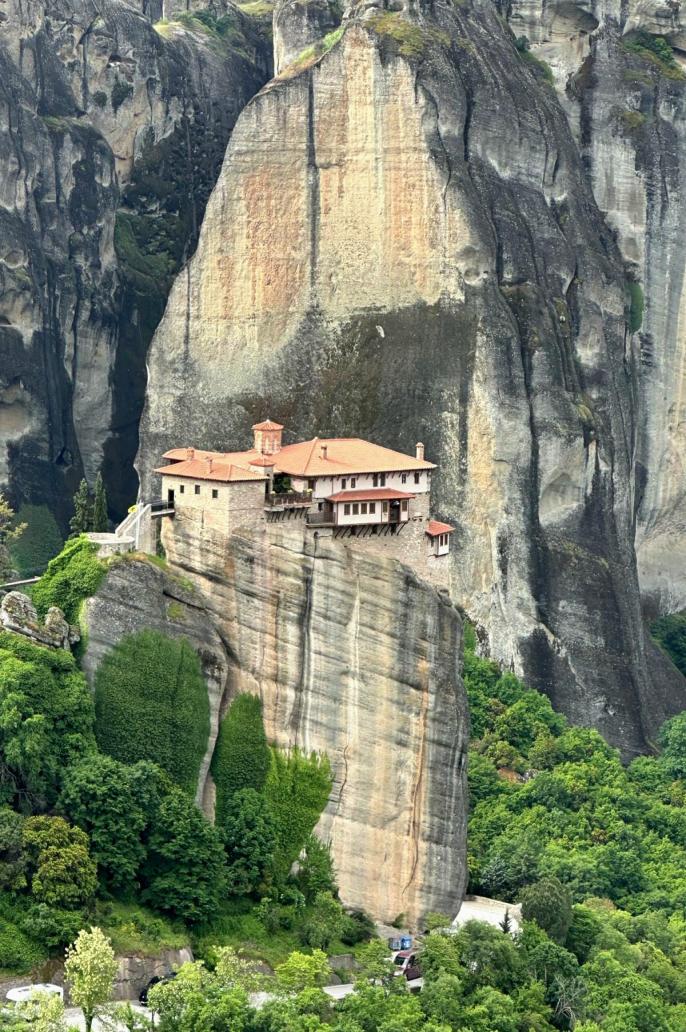
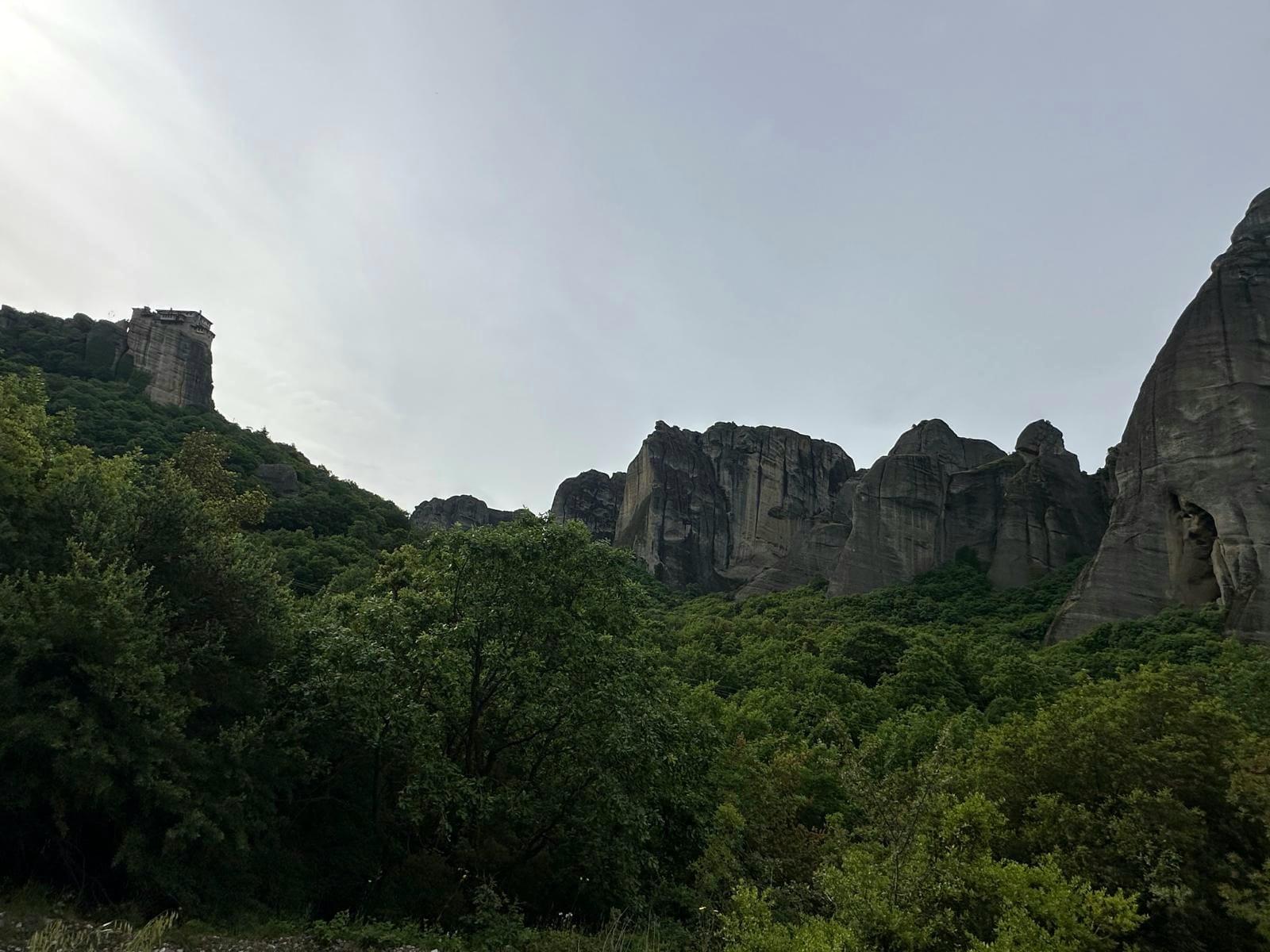
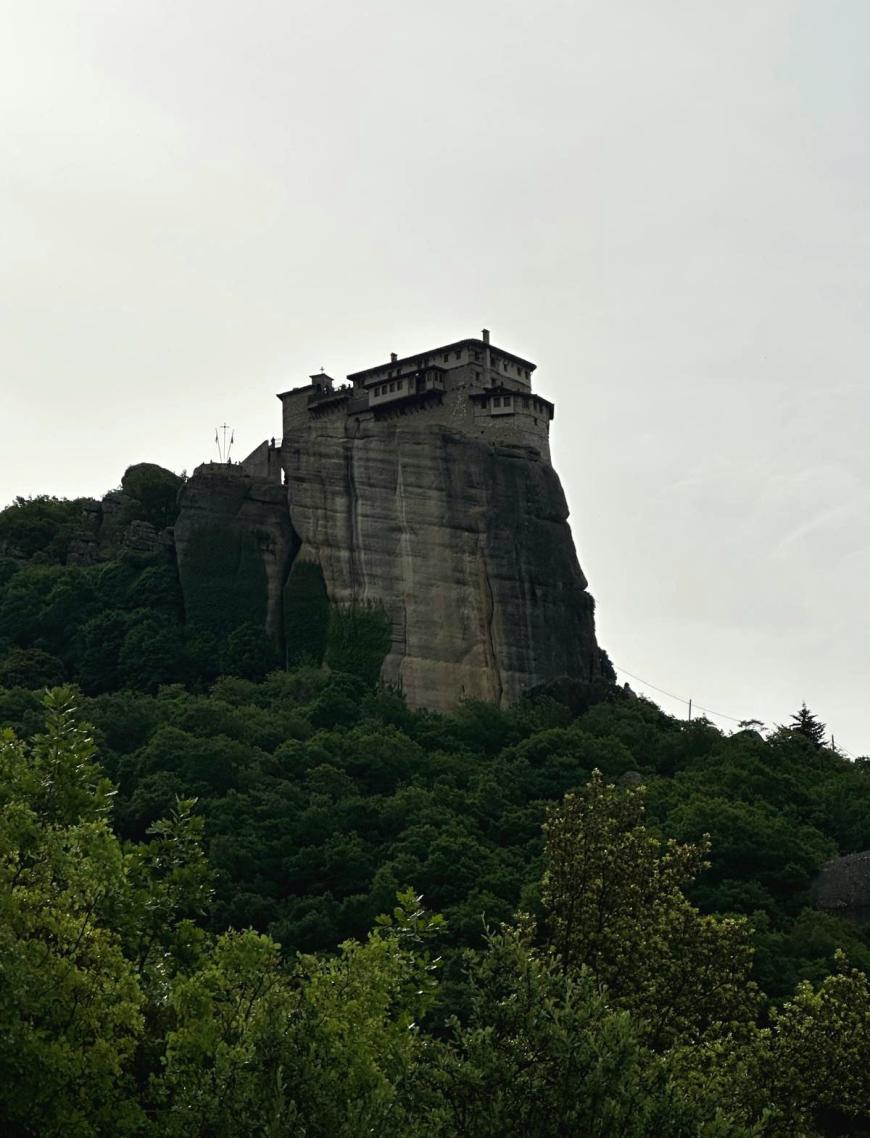
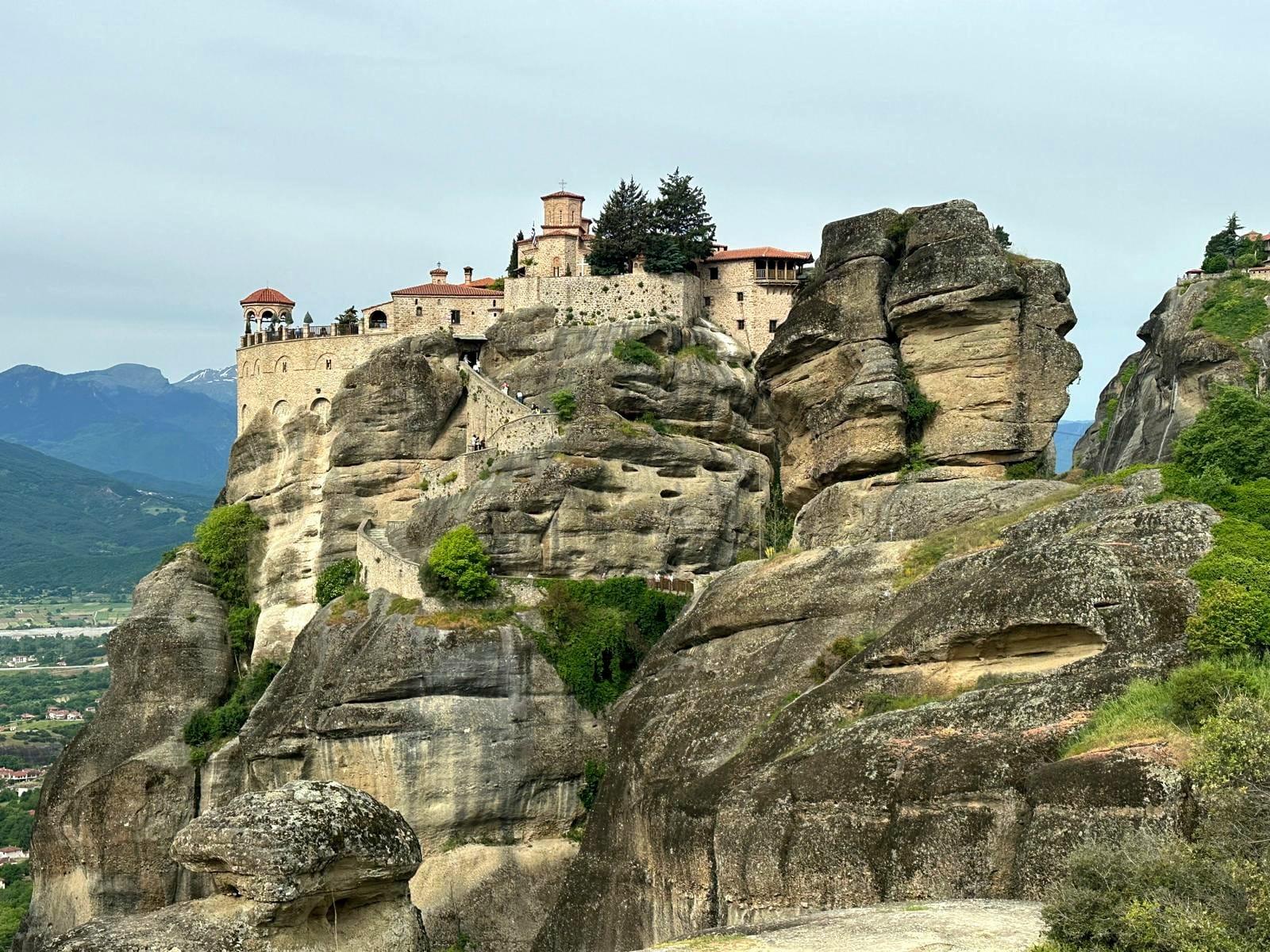
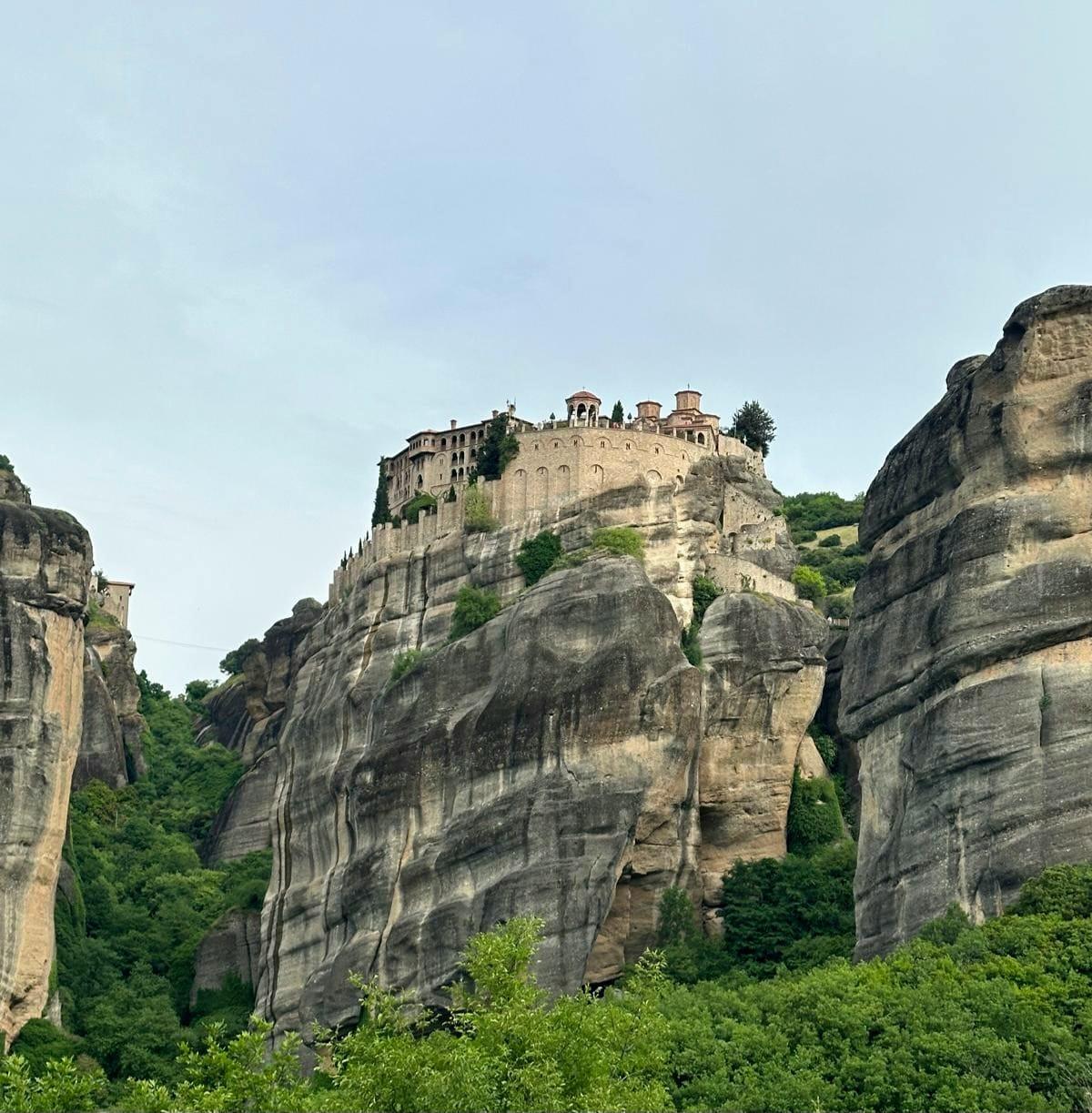
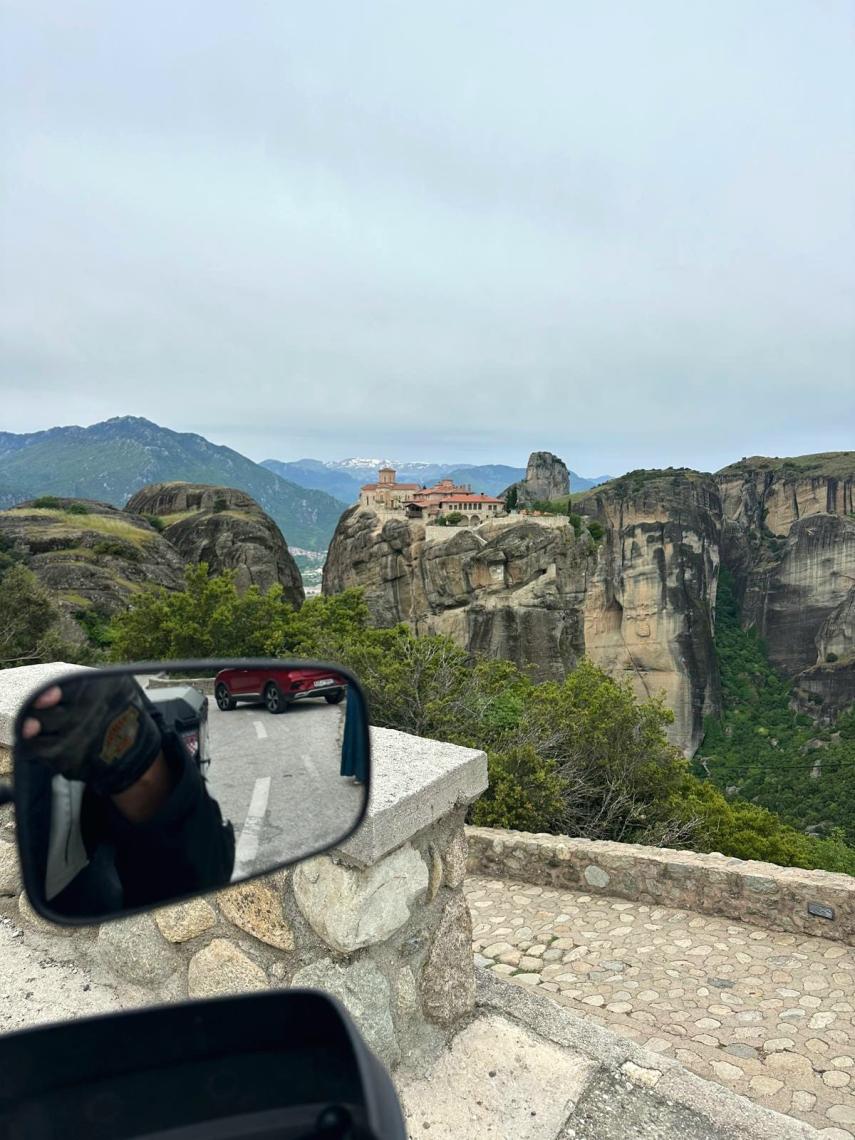
The monasteries of Meteora or "Monasteries in the sky" are constructions that crown the summit of a series of sandstone and conglomerate rock formations that erosion has shaped in the most whimsical way. They were founded by monks seeking isolation and security and there were twenty-four constructions, although currently only six remain active. During World War II, the vast majority were destroyed, as the Greek resistance used them as a refuge.
Access to the monasteries was deliberately made complicated to the point that the only way to reach them was through ladders, and until the end of the 17th century, the only way to supply them was through ropes and baskets. By the early 20th century, access was improved by carving steps into the rock and building a few bridges. Currently, the six remaining monasteries can be visited as long as dress code rules are followed. Women cannot enter wearing pants, so they are provided with a cloth at the entrance as a skirt and must cover their heads with a scarf. Men do not face as many issues when accessing them. Among them, the largest is the Great Meteor or of the Transfiguration, founded around 1340, Orthodox like all the others and initially dedicated to the Virgin Mary and later to the Transfiguration of Jesus. Its construction took decades due to the difficulty of raising materials to that height. Today it remains active and is a UNESCO World Heritage Site.
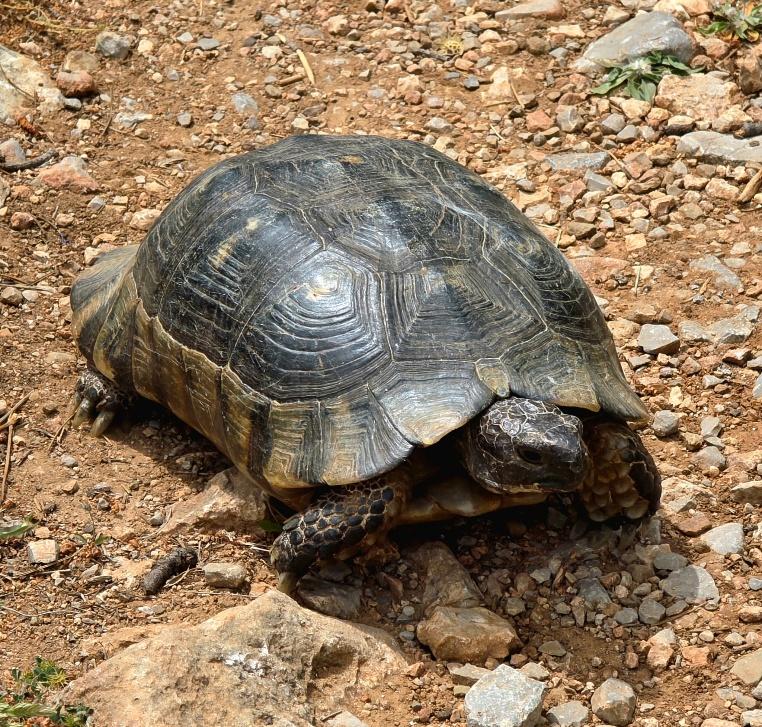
The walk, as you can imagine, has been impressive. Besides the fact that the history of each of the monasteries is fascinating and entertaining. The feeling that they are going to slide down the mountain is constant in all of them. It is impossible to even imagine what could have gone through the minds of the monks who founded them; perhaps in their desire to distance themselves from the world, they sought to be closer to God. The next stop has been the sacred city of Delphi, where we have set up base camp and walked to visit. Three and a half kilometers uphill, crossing paths with all kinds of "wildlife." Turtles are abundant around here to the point that you find warning signs on the road to avoid running them over. Thank goodness the views were worth it because the climb was quite exhausting.
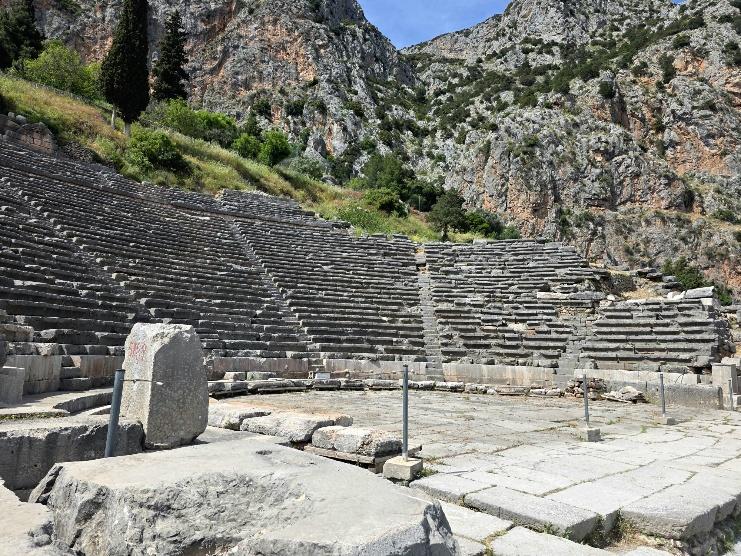
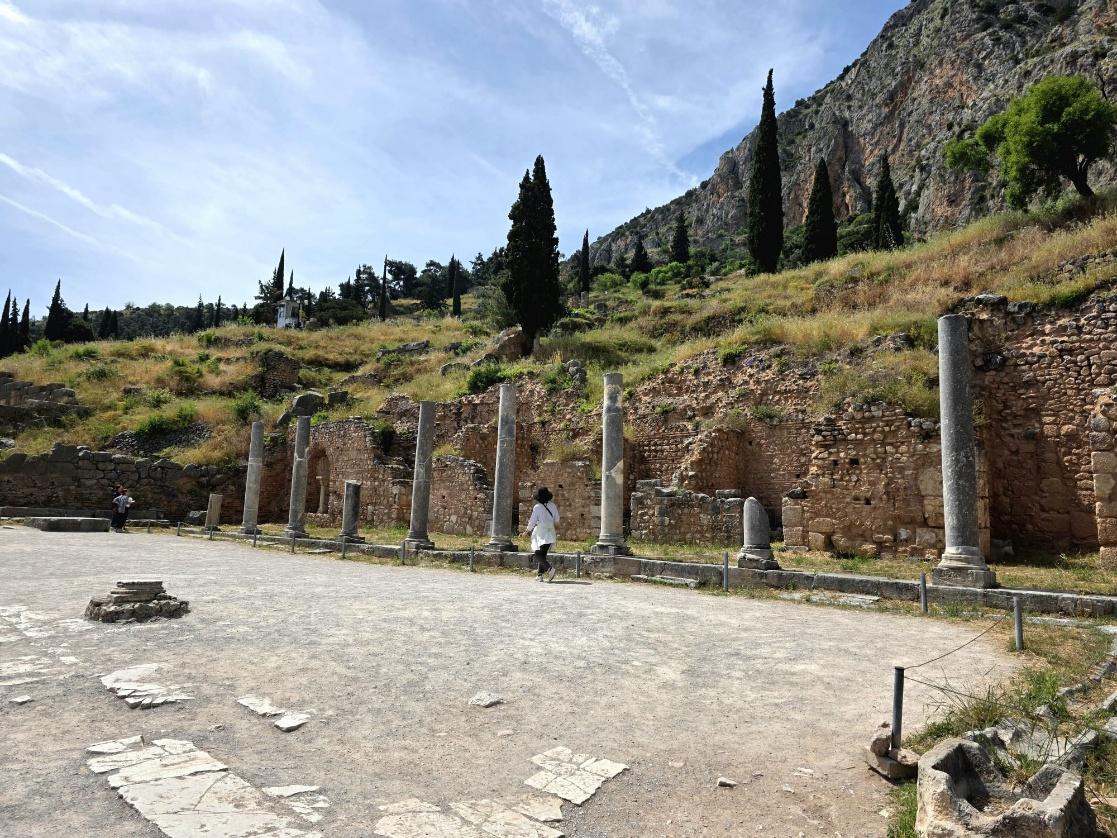
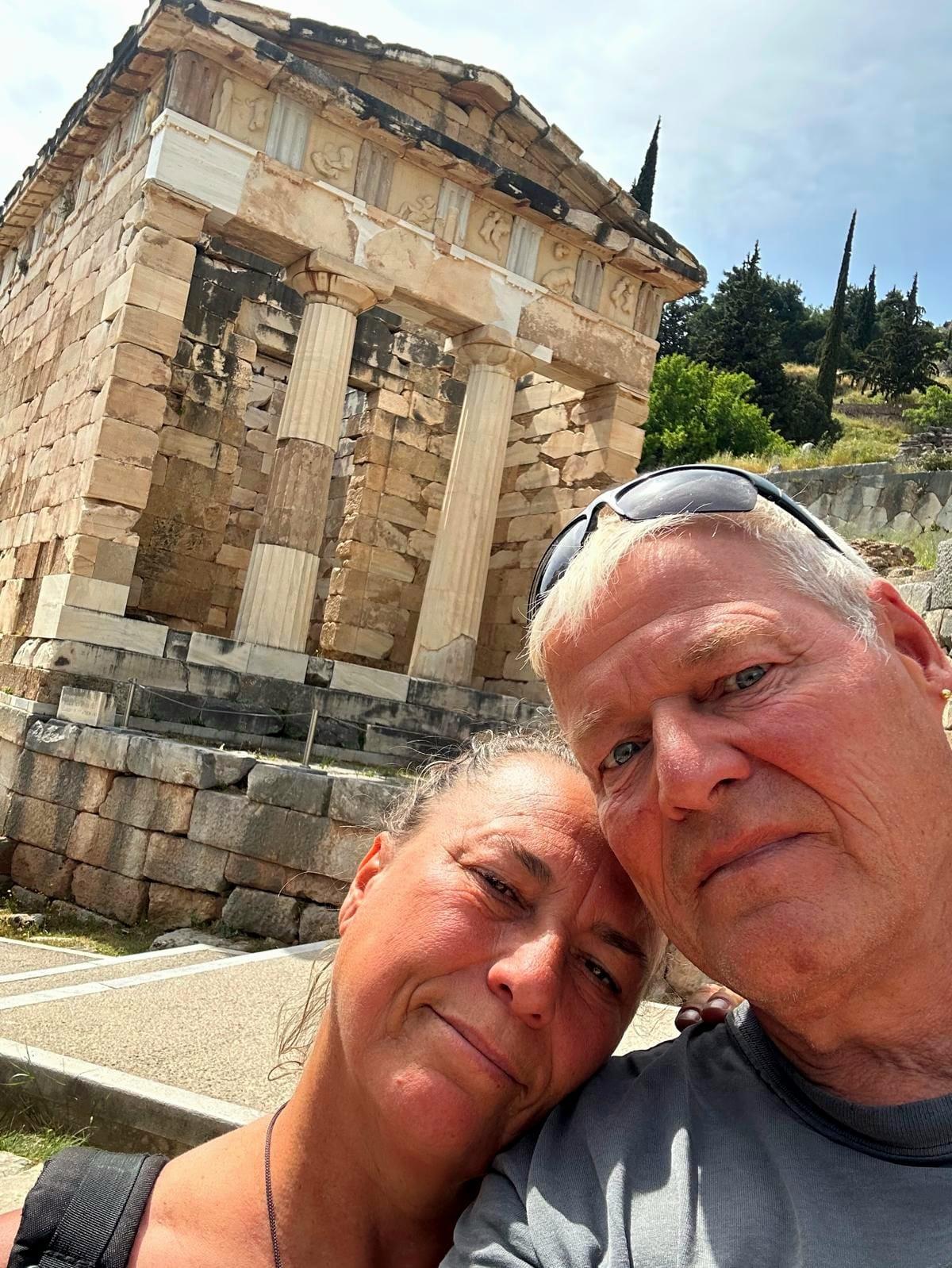
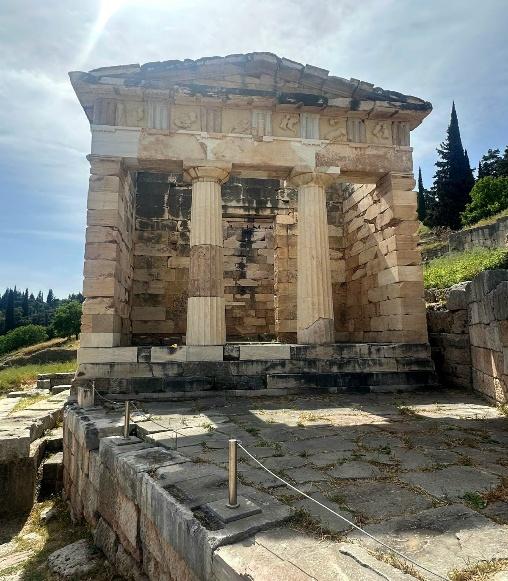
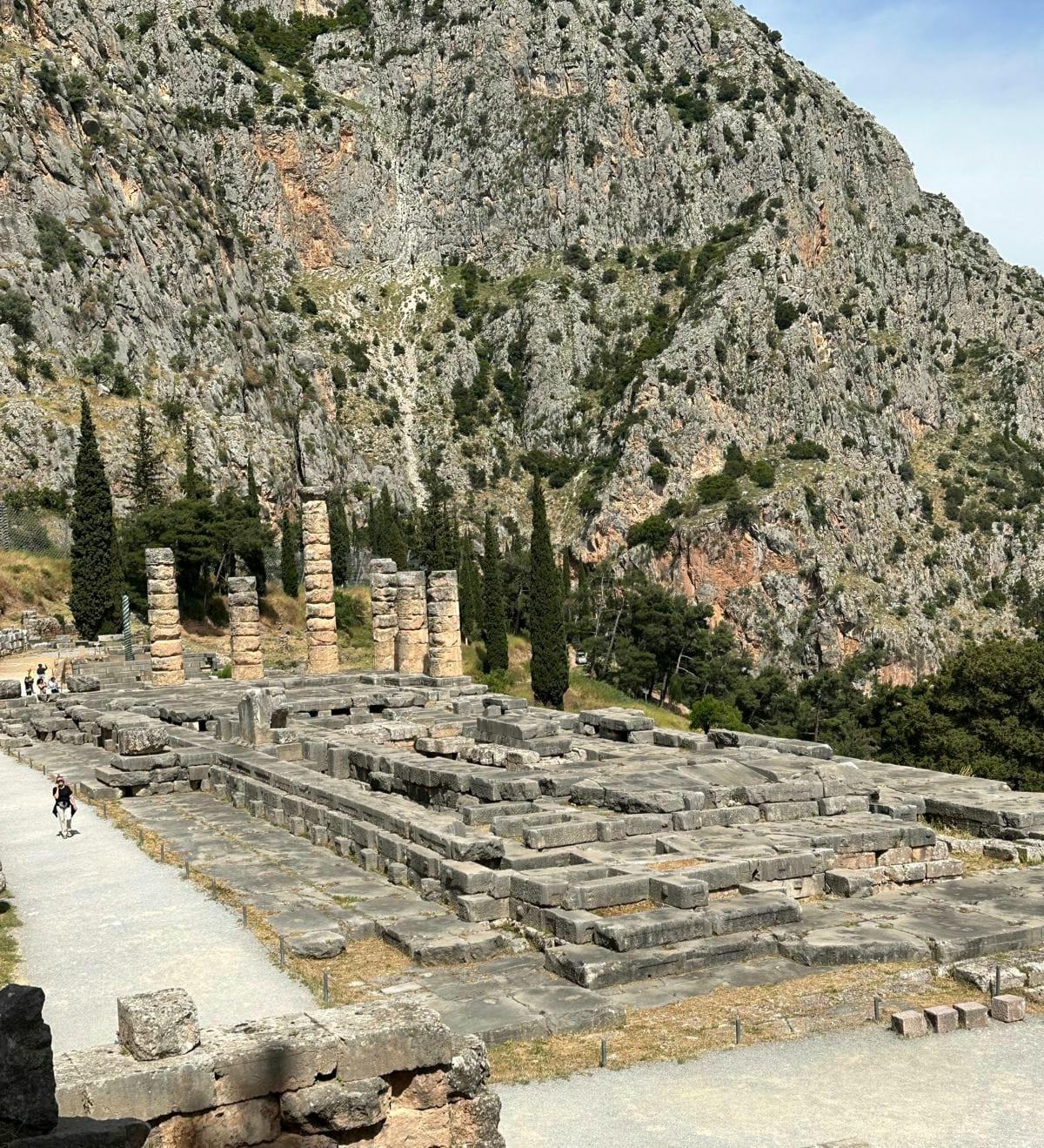
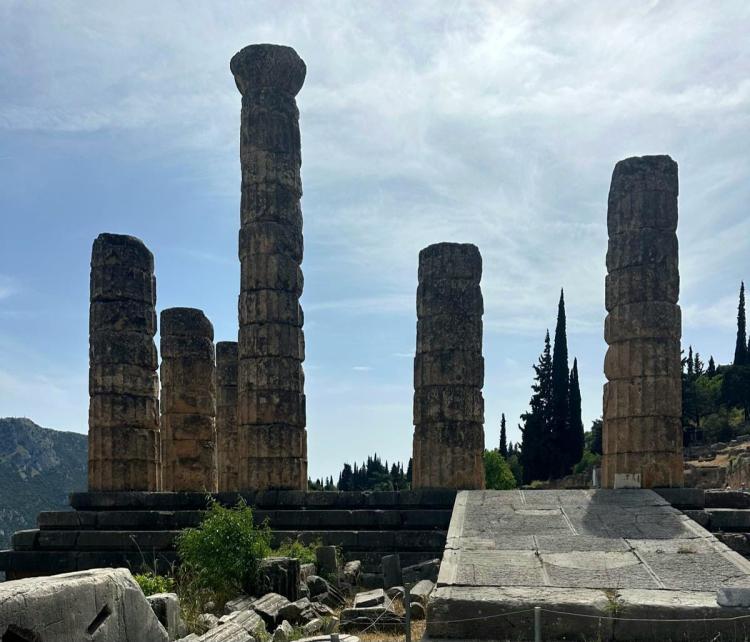
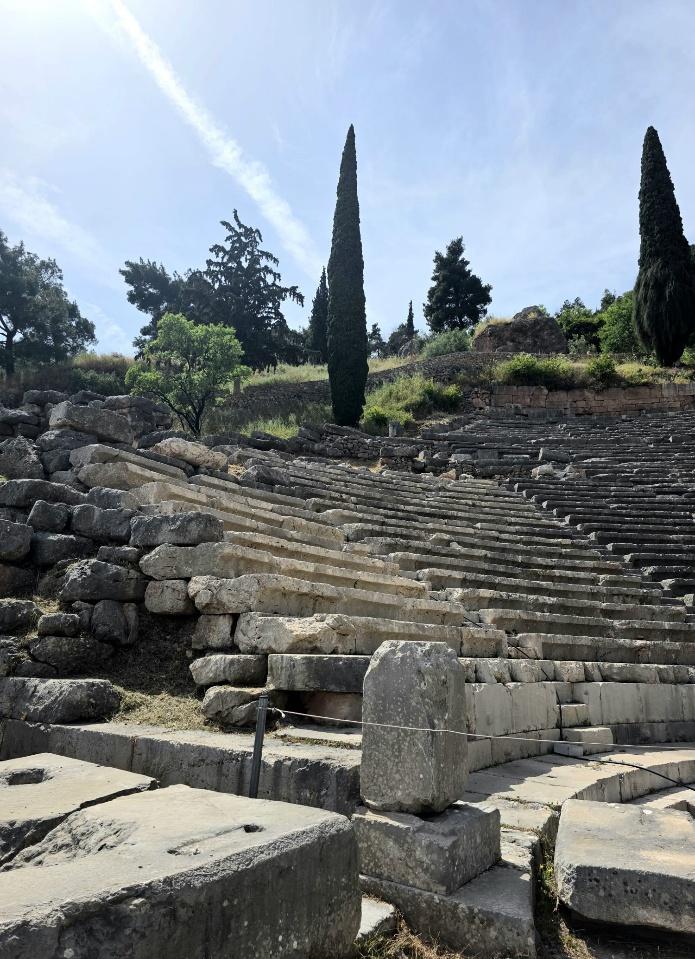
Delphi, considered by the ancient Greeks as "the navel of the world," was the most important spiritual center dedicated to the god Apollo. Located on the slopes of Mount Parnassus, it housed the most revered and respected oracle of the Greek religion. According to beliefs, the oracle was a woman, the Pythia, priestess of the temple of Apollo, who, enveloped in mysterious vapors, gave enigmatic answers that often profoundly influenced the decisions of the person consulting. During the walk through the city, you encounter the Temple of Apollo, where the oracle was located, and the Theater, with spectacular views and a capacity of five thousand spectators. Classical theater was often performed there, as well as musical events and competitions like the Pythian Games in honor of Apollo. The Treasure of the Athenians is one of the few buildings in the sanctuary that archaeologists were able to reconstruct and is quite well preserved.
According to the myth, Apollo claimed Delphi by killing the serpent Python, guardian of the Earth goddess, Gaia. The god's victory purified the place and established it as his sacred sanctuary where an Oracle would always speak in his name. Theodosius I ordered the destruction of pagan temples and iconography, thus making the temple erected in his name in the city of Delphi disappear. The visit ended at the museum, which, to be honest, we visited a bit more hurriedly, although it was also quite a cultural awakening.
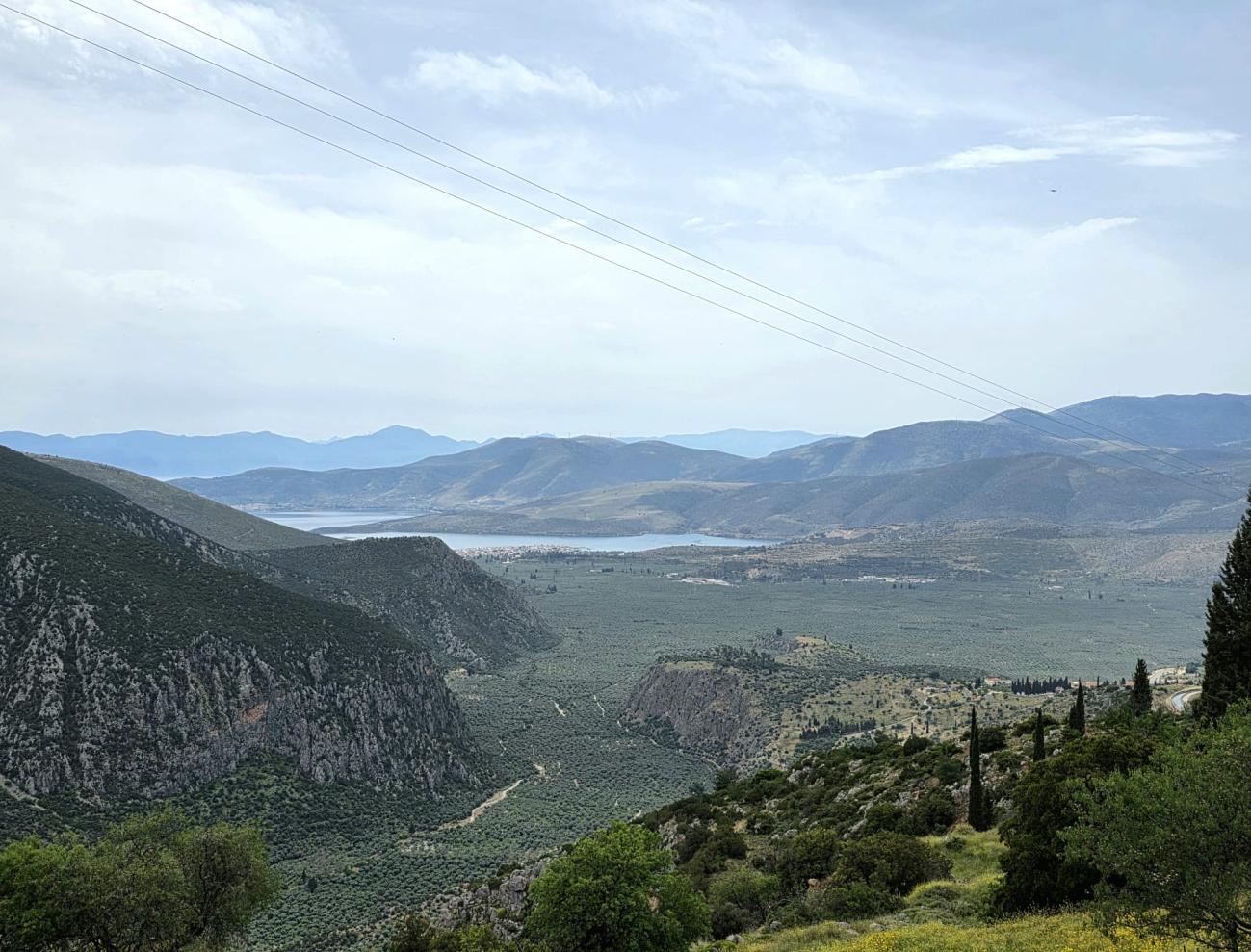
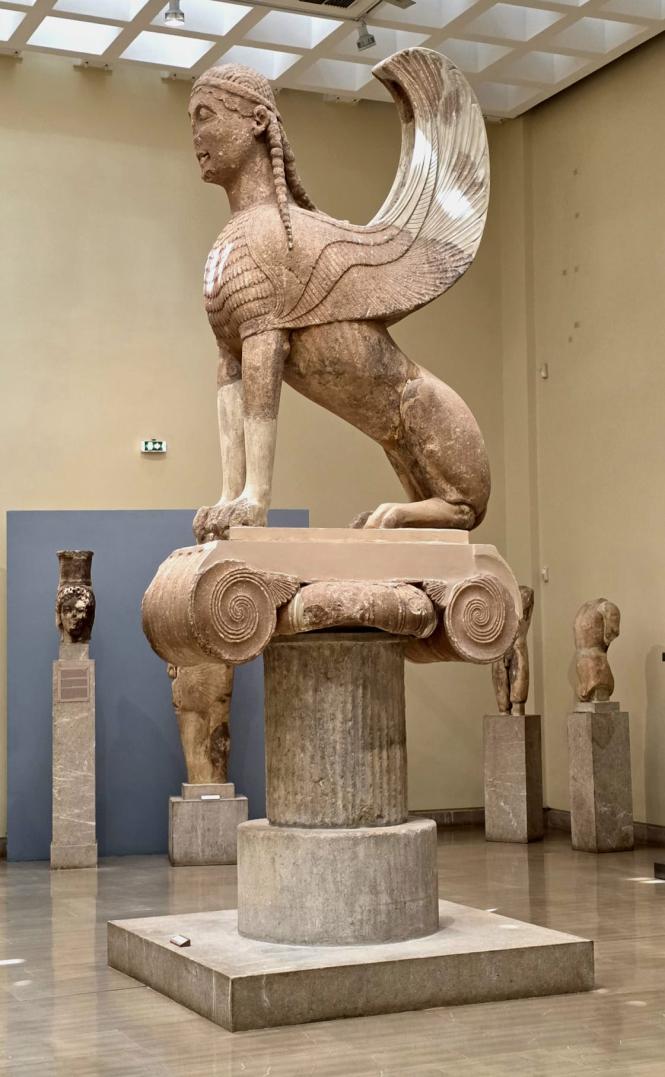
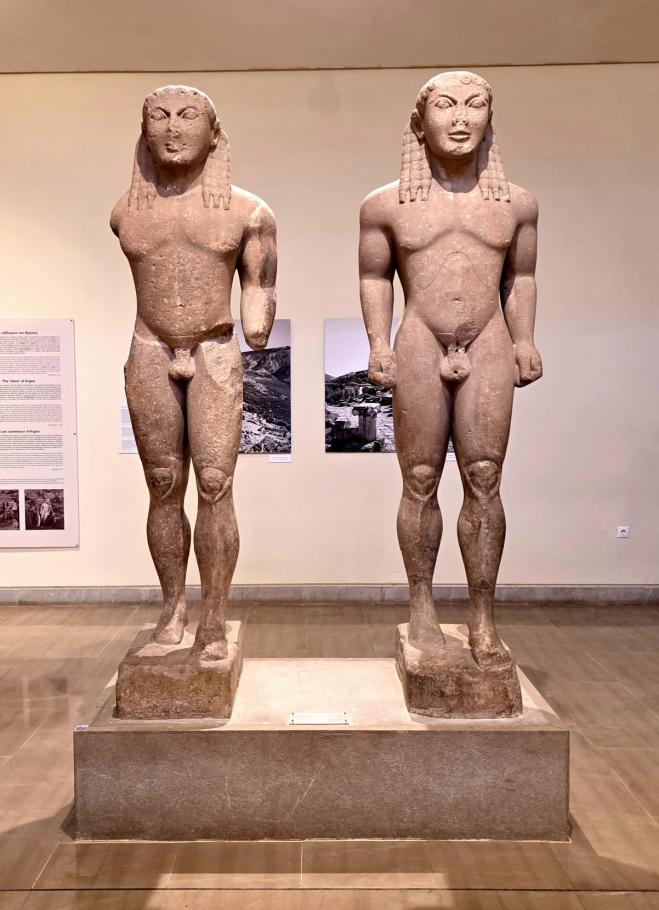
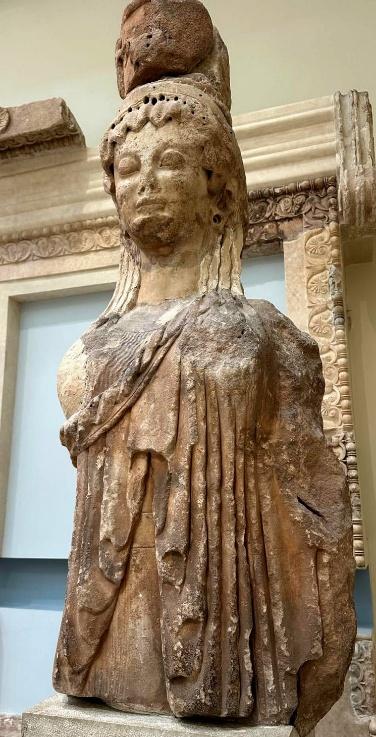
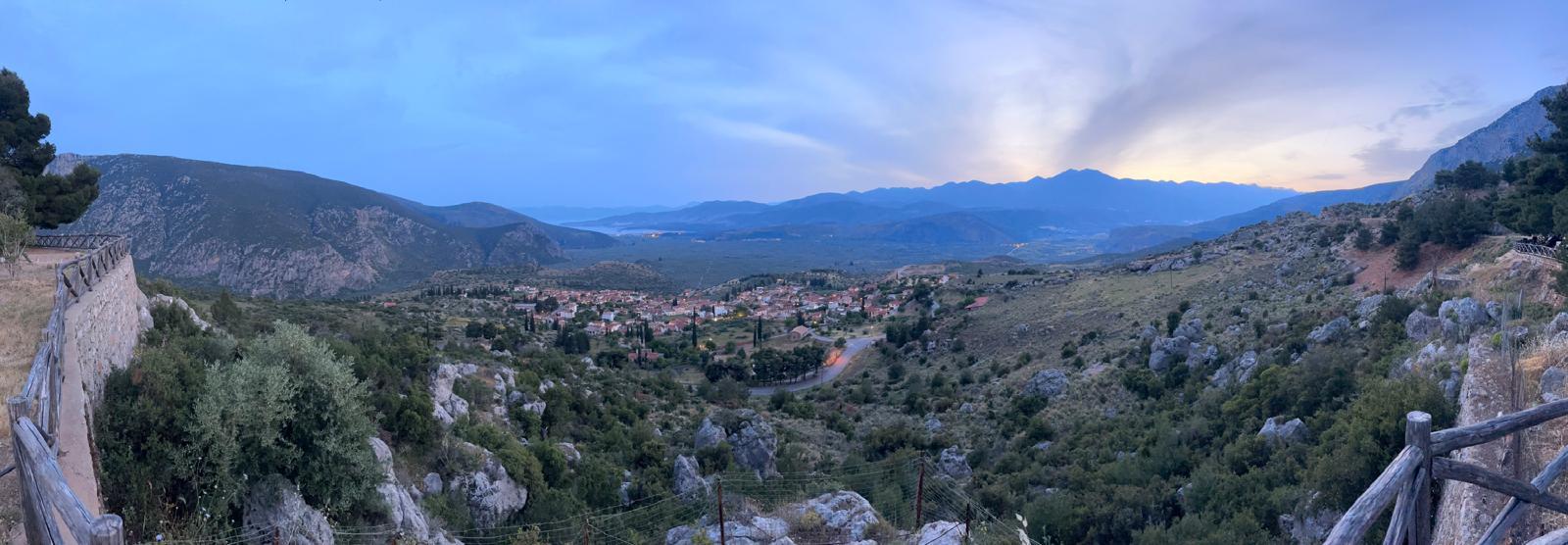
The Sphinx of the Nasios, the Twins of Argos, or the caryatid statue are examples of what is preserved in the museum, which is not very large but is very well organized and referenced. Before starting the return, we made a refreshment stop at a little bar in the village with views of the gorge. The campsite where we will stay tonight has the same views: a valley of olive trees with a village of red houses and in the background the Gulf of Corinth with the snow-capped Mount Ziria on the horizon.
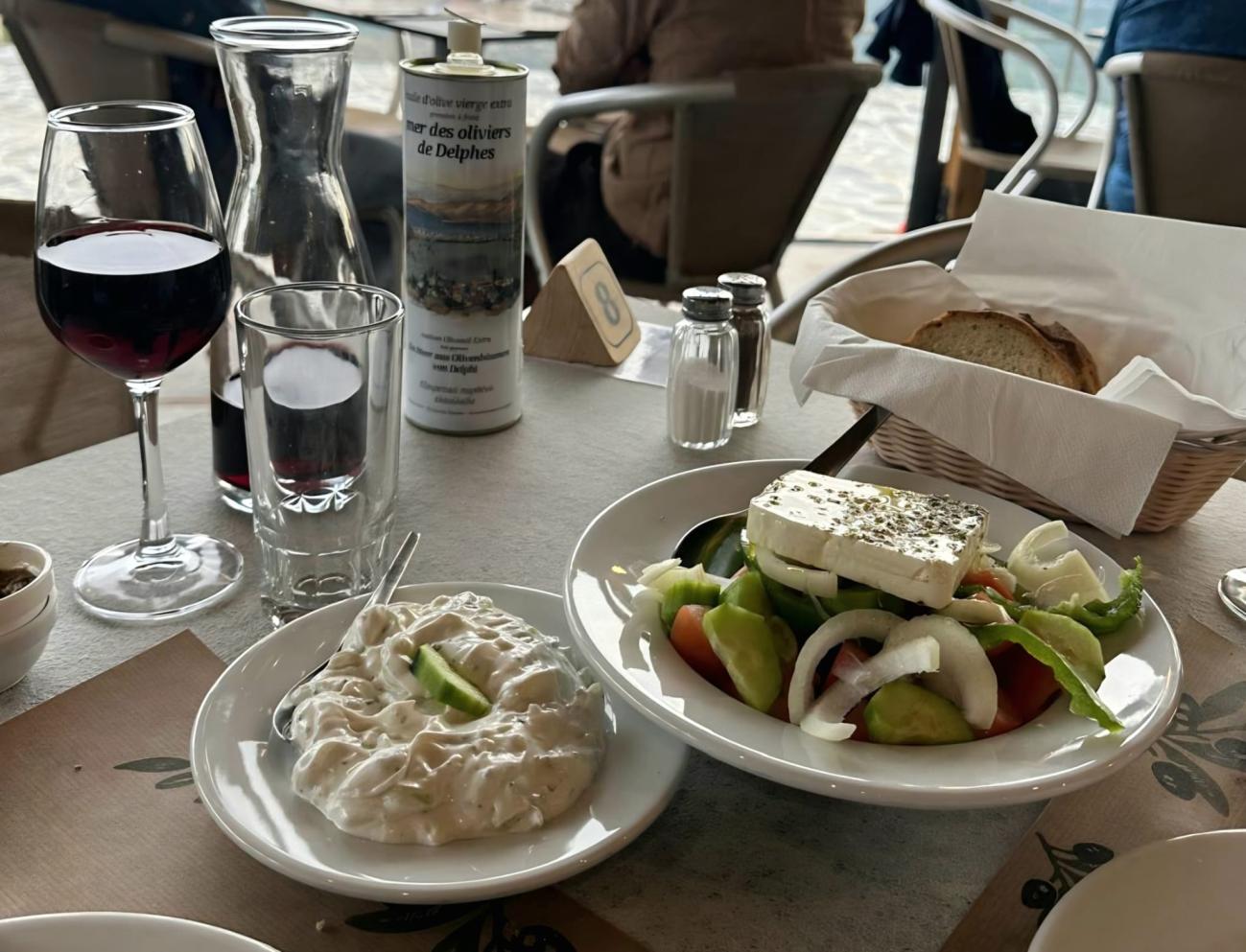
The fatigue of the day and the desire to try "moussaka" tipped the balance, and the option to head to the restaurant won by a landslide. Greek salad, tzatziki with cucumber and garlic again, and moussaka, which is a typical Greek dish similar to lasagna but with eggplant and potato. For dessert, a baklava made of thin and crispy filo pastry filled with walnuts and drenched in honey syrup that resembles Arabic sweets because it is of Turkish origin. A bit too sweet for our taste, but since it was a small piece, it wasn't overwhelming. Good night… I’ll keep you posted 😘
Today we head straight to the village of San Giovanni to catch another ferry towards Sicily. Crossing the Strait of Messina. The last time I was in these latitudes, Mount Etna was in full eruption on a cruise heading to Greece.
This morning we set off to the principality on our motorcycle for a little visit. To be honest, we went just to buy a sticker for Beast and to add the country to our list.
Tuesday, May 5, 2026 – 26th day Camping Limnopoula (Ioannina) Ioannina has turned out to be quite a discovery. Yesterday we were really surprised to see what the city had hidden, and on the way home, I did a bit of research.
Join the conversation (0)
Share a thought, a question, or your own travel memory.
No comments yet. Be the first to write one!
Leave a comment